Planos
Nestled along the lush eastern coast of the island of Zakynthos, Planos reveals itself to travelers as a skillfully composed mosai...
Updated 7 July 2026
This season · July · Summer
What to do in Planos now
The story
The story of Planos
A journey through time: from origins to rebirth
The history of Planos is closely tied to the changing fortunes of the island of Zakynthos, called by the Venetians the 'Flower of the Levant'. Its roots reach back to the Byzantine era, but it was under the rule of the Serenissima, which lasted almost three centuries, that the territory took on a defined structure. The area of Planos was strategically vital for keeping watch over the seas; its elevated position above the bay allowed enemy incursions to be spotted in good time. Yet the town's present appearance is the result of a courageous reconstruction following the devastating earthquake of 1953, which levelled much of the island's historic structures. Despite the destruction, the community managed to preserve the original urban layout, blending new buildings into a natural setting that remains the true protagonist of local history, amid fertile land and a generous sea.
Tsilivi Beach: the azure heart
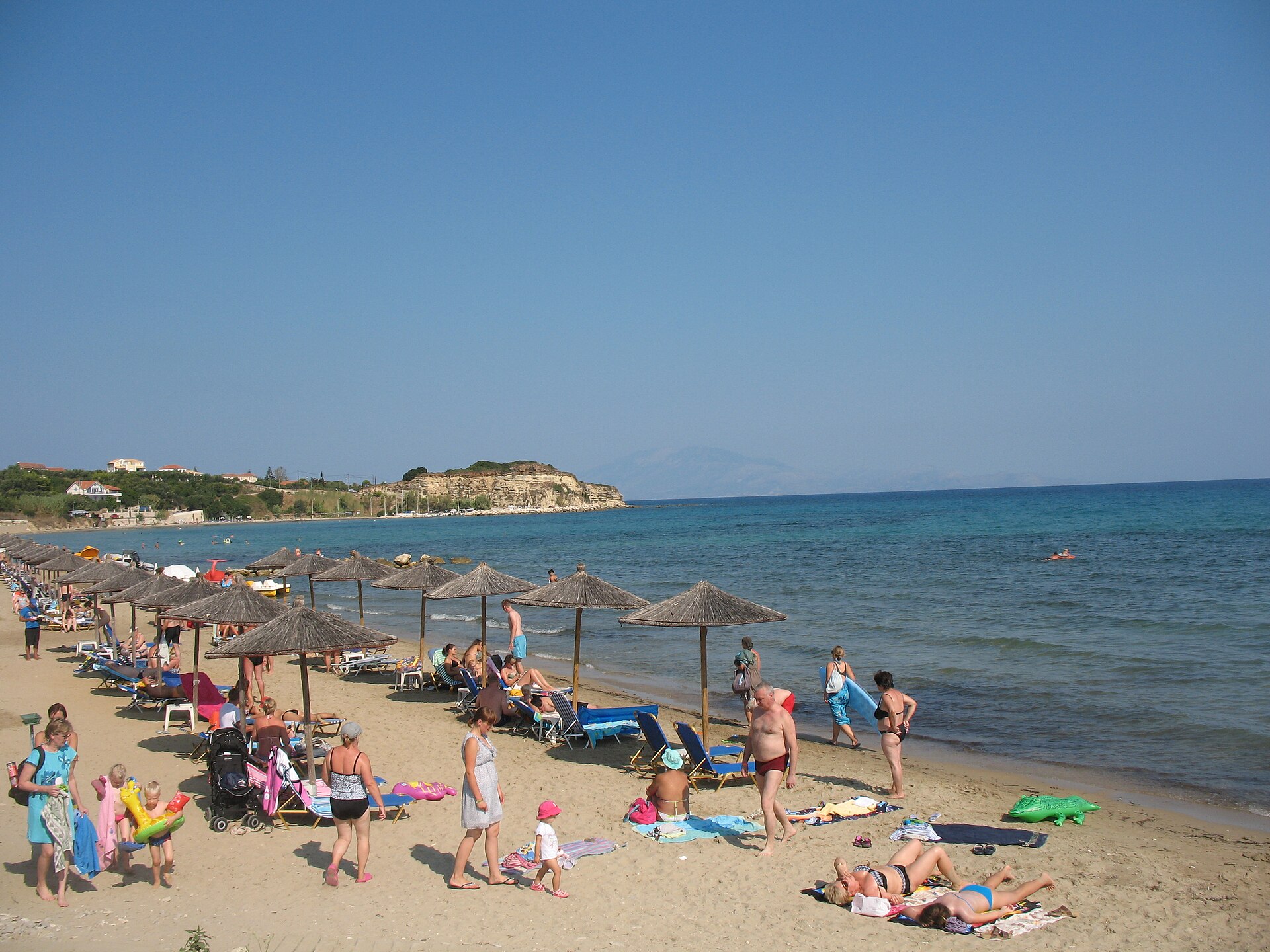
The true icon of Planos, Tsilivi beach stretches for over two kilometres in a crescent of golden sand lapped by shallow, crystal-clear waters. This stretch of coast is renowned for its safety and the quality of its facilities, which regularly earn it the Blue Flag award. The seabed slopes gently, making it ideal for long walks in the water or relaxed swimming. Beyond relaxation, Tsilivi is a lively hub for water-sports enthusiasts, from windsurfing to parasailing, offering a dynamism that contrasts pleasantly with the calm of the hills behind it. It is the place where the town's social life is at its liveliest, amid stylish beach clubs and quieter corners where the sound of the surf remains the only travelling companion.
The Vardiola: the Venetian sentinel
Standing guard over the northern coast of Planos is the Vardiola, a small but significant watchtower from the Venetian era. These structures were an integral part of a complex visual-communication system that covered the entire perimeter of the island. Built of local stone and characterised by a square plan with a pyramidal roof, the Vardiola of Tsilivi is one of the few surviving examples testifying to the defensive needs of the past. Today it no longer serves to signal the arrival of pirates, but acts as an evocative panoramic point from which to admire the horizon where the blue of the sky merges with that of the Ionian Sea. It represents a silent architectural bridge between the tourist present and a past in which the sea was a constant source of danger.
Milanio Naval Museum: memory of the seas
Located in the heart of Planos, the Milanio Naval Museum is a small treasure for enthusiasts of maritime history. Founded by the painter and researcher Antonis Miller, the museum houses an exceptional collection tracing four thousand years of Greek seafaring. Inside, visitors can admire meticulously reconstructed ship models, period uniforms, navigation instruments and a vast collection of photographs and documents recounting the exploits of Zakynthian sailors. What makes this place special is its narrative approach: every item tells a story of cultural exchange, naval battles and everyday life on board. It is an essential stop for understanding how the fate of Planos and of the whole island was forged by the waves and by the courage of those who sailed them.
The hinterland and the hills of Tragaki
Moving just a few kilometres away from the coast, the landscape of Planos changes radically, climbing towards the hills of Tragaki. This area is the green lung of the town, a maze of centuries-old olive groves and vineyards producing some of the island's finest fruit. Here time seems to flow at a different pace, dictated by the seasons and by agricultural work. The winding roads offer spectacular glimpses of the coast below and of the nearby island of Cephalonia, visible on the clearest days. Exploring the hinterland means discovering small rural chapels, old stone houses spared by the earthquake, and a restorative silence that invites reflection, far from the bustle of the busier seaside resorts.
Nature and Landscape: between land and sea
The landscape of Planos is defined by a vivid chromatic contrast: the emerald green of Mediterranean vegetation plunging into the intense turquoise of the sea. The coast is not only sand, but also features rocky formations and small hidden coves, perfect for snorkelling. The local flora is dominated by Aleppo pine and olive trees, the latter a true pillar of the area's economy and aesthetics. During spring, the land turns into a flowering garden, with anemones and wild orchids colouring the paths. It is a delicate and precious ecosystem, where terrestrial biodiversity meets a rich marine habitat, an integral part of the balance that makes the Ionian Islands so different from the rest of mainland Greece.
Traditions and Flavours: the taste of Zakynthos
The gastronomic culture of Planos is a hymn to simplicity and the quality of its ingredients. Not to be missed is 'Ladotyri', a spicy cheese preserved in olive oil, and 'Sartsa', a succulent meat stew enriched with garlic and local cheese. Sweets hold a place of honour, with 'Mandolato' (almond nougat) and 'Pasteli' (sesame and honey bars) found in every artisan shop. But tradition in Planos also passes through the ear: it is not unusual to witness spontaneous performances of 'Kantades', polyphonic songs influenced by Italian music that tell of love and everyday life. These traditions are not mere tourist attractions, but the living pulse of a community proud of its roots.
What not to miss in Planos and its surroundings
- A sunset aperitif at the Venetian Vardiola to enjoy the view over the bay.
- A guided visit to the Milanio Naval Museum to discover the secrets of Greek seafaring.
- A day of relaxation on Tsilivi beach, taking advantage of its shallow waters.
- A walking excursion among the olive groves of Tragaki to admire the panorama from above.
- A traditional dinner at a taverna, trying rabbit Zakynthos-style.
- A boat tour to the nearby Blue Caves, easily reached from the coast.
When to go and how to experience the place
The ideal period to visit Planos runs from May to October. Late spring offers mild temperatures and nature in full bloom, ideal for those who love hiking. July and August are the liveliest months, perfect for those seeking nightlife and summer warmth, although the beaches are more crowded. September is perhaps the magical moment: the sea is very warm, the crowds thin out, and the golden afternoon light turns every photograph into a masterpiece. To fully experience Planos, it is advisable to rent a vehicle to explore the nearby hamlets and not limit yourself to the main street, seeking instead the paths that lead inland, where Greek hospitality shows itself in the sincere smile of the locals and in a glass of wine offered in the shade of a pergola.
FAQ
La spiaggia di Tsilivi è adatta ai bambini?
Quanto dista Planos dalla città di Zante?
È facile trovare parcheggio vicino alla costa?
Cosa si può vedere in un giorno a Planos?
Getting there
- Aeroporto Internazionale di Zante 'Dionysios Solomos' (ZTH) - 9 km
- Non sono presenti linee ferroviarie sull'isola.
- Da Zante Town seguire le indicazioni verso nord per Tsilivi/Planos. La strada è asfaltata e ben segnalata.
- Il noleggio di uno scooter o di un'auto è fortemente consigliato per esplorare l'entroterra e le calette meno accessibili.
Perfect for
Servizi eccellenti e mare sicuro rendono Planos una delle mete migliori per chi viaggia con bambini.
Tra musei navali e torri veneziane, c'è molto da scoprire oltre la vita da spiaggia.
Un paradiso per chi cerca i sapori autentici della dieta ionica, tra olio extravergine e formaggi tipici.
To see