Nikiana
Between the town of Lefkada and Nydri, the coastal road runs narrow between the scrubland and the sea, and at a certain point it o...
Updated 8 July 2026
The story
The story of Nikiana
A village born along the strait
Nikiana does not feature among the great milestones of Lefkada's history, and this is precisely its distinguishing trait: it is one of the many small farming and fishing settlements that grew over the centuries along the island's eastern coast, where the channel separating Lefkada from the mainland offered calm waters, natural shelter and land suited to olive growing. Like most villages on this side of the island, it developed around a handful of fishing and farming families, in close relationship with the sheltered sea of the strait, quite unlike the island's western coasts, open and battered by the wind. The name itself, of local origin, has been handed down together with a subsistence economy made of oil, fishing and small-scale trade by boat with the opposite coast of Acarnania, just a few miles away.
Lefkada between rulers: the historical background of Nikiana
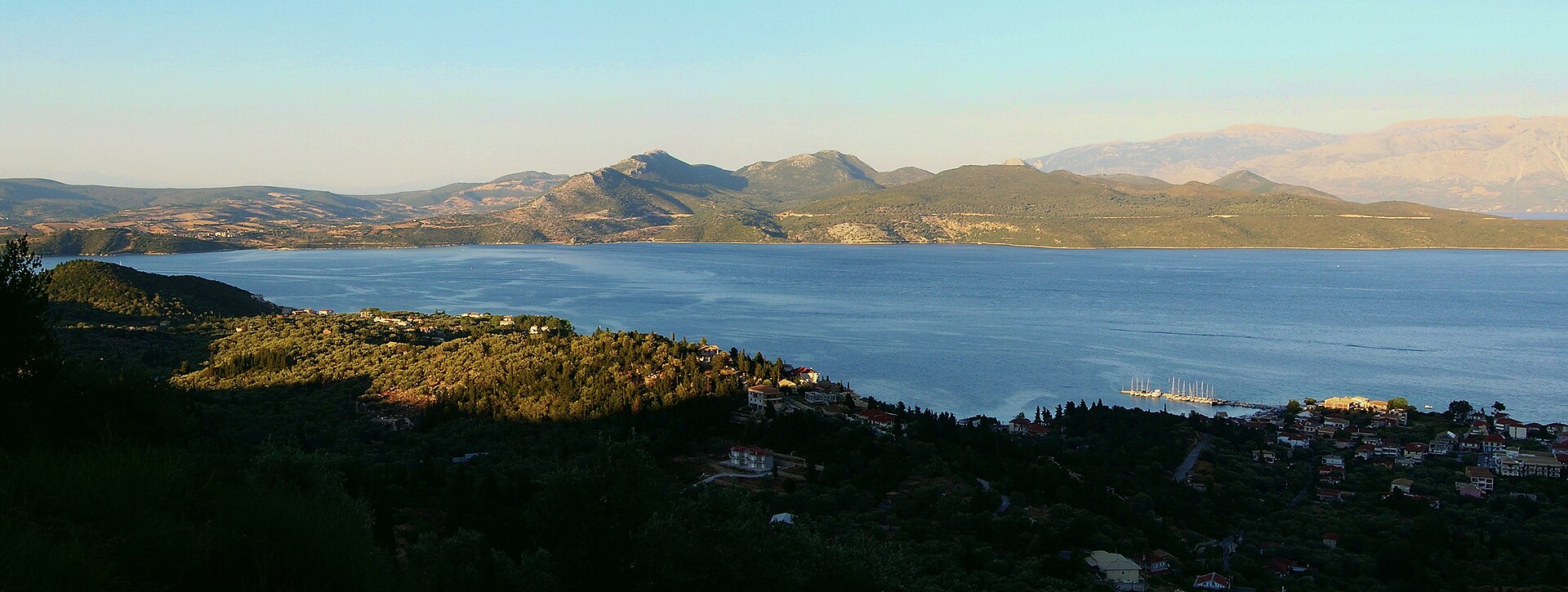
Nikiana's history must be read within the broader story of Lefkada, an island that in antiquity was linked to the mainland by an artificial isthmus dug by the Corinthians, who founded the city of Leucas here in the 7th century BC. In the following centuries the island passed under Byzantium, then experienced the long Venetian domination, from 1684 to 1797, which shaped its rural economy based on the olive tree and introduced the land ownership system still legible in the landscape today. There followed the brief French rule, the Russo-Ottoman one and finally the British protectorate of the Ionian Islands, until union with Greece in 1864. Throughout this long succession of powers, villages like Nikiana remained on the margins of the major events but absorbed their agrarian imprint, while the earthquakes that periodically strike the island, in particular the devastating one of 1948, left their mark on the low, earthquake-resistant architecture that still characterizes the village's houses today.
The little harbor and the seaside promenade
The heart of daily life in Nikiana is the small pier where fishing caiques and a few pleasure boats moor, a reference point for anyone wanting to rent a small boat and explore the strait independently. Along the promenade that runs beside the water, taverns line up with tables almost at the water's edge, small shops and a couple of mini-markets, in an informal atmosphere that changes little between morning and evening. At sunset, when the light turns the mountains of Acarnania on the opposite shore pink, the pier becomes the village's natural gathering place: families out for a stroll, boys diving off the nearby rocks, elderly people sitting and chatting over a Greek coffee. It is here that Nikiana's character comes through best, a place that lives off the sea without the signs and evening venues typical of the island's more touristy destinations.
The chapel on the islet facing the village

Right off the coast of Nikiana a small rocky islet rises, home to a white chapel reachable by swimming across the narrowest stretches or by a few minutes' boat ride: an image that has become almost a symbol of the village. As happens in many corners of the Ionian Islands, the small church marks a point of informal devotion rather than a monument of great historical importance, but its value lies precisely in the scene it composes together with the sea, the rocks and the boats moored alongside it. Reaching it early in the morning, when the water is still perfectly calm, or at sunset, when the islet stands out against the light, is one of the small experiences that best captures the spirit of Nikiana: a place where popular faith and the seaside landscape intertwine naturally, without emphasis.
The coves of white pebbles
The Nikiana coastline is a succession of small bays of pale pebbles and fine gravel, shaded by tamarisk trees offering shelter from the sun during the hottest hours, with a seabed that slopes gently and waters that are particularly transparent thanks to the calm nature of the strait. These are beaches quite different from the sandy, spectacular ones on the island's west coast, such as Porto Katsiki or Egremni: here the charm is more understated, made of calm, small crowds and a sea that is almost always flat, ideal for families with small children and for anyone seeking a relaxing swim without waves. Some coves can be reached directly from the coastal road, others require a short walk or arrival by boat.
- Nikiana Beach, the village's main bay, with sunbeds and taverns just steps away
- The pebble coves toward Episkopi, more secluded and shaded by tamarisk trees
- Perigiali, a small coastal hamlet with other quiet coves
- Free bathing spots along the strait, popular with those arriving by boat
The olive groves and the oil of the hinterland
Behind the village, the road climbs gently through expanses of centuries-old olive trees that are the true, quiet heritage of this part of Lefkada: the island is among the areas of Greece with the highest density of olive trees, a direct legacy of the Venetian agrarian policy that encouraged large-scale cultivation. Many Nikiana families still own small plots handed down from generation to generation, and in the autumn and winter months the olive harvest still marks the rhythm of village life, with tarpaulins spread beneath the trees and small local mills in full swing. The oil produced, full-bodied and with a decisive taste, reaches the tables of the village's taverns almost at zero food miles, and it is one of the ingredients that best expresses the bond between Nikiana and its land.
Episkopi, the traces of an ancient bishopric
A few minutes from Nikiana, toward the town of Lefkada, lies the small hamlet of Episkopi, whose very name, meaning bishopric in Greek, recalls how a bishop's seat with an early Christian basilica once stood here in the Byzantine era, traces of which remain in the area near the sea. It is a minor site compared to the island's great archaeological sites, but a valuable one for anyone wishing to understand the historical layering of this coast, where religious and agricultural settlements have followed one another for centuries along the same calm, sheltered shoreline. Today Episkopi is mainly a small residential hamlet with a few pebble coves, but its name remains a toponymic trace of a past more significant than its present size might suggest.
The Kariotes lagoon, a refuge for birds
Continuing toward the town of Lefkada one comes to Kariotes, a village overlooking a brackish lagoon that represents one of the island's most interesting wetlands from a naturalistic point of view. Once also exploited for salt collection and lagoon fishing, today the Kariotes lagoon is above all a stopover point for herons, little egrets and other waterbird species, easily visible from the road running alongside it. It is a landscape quite different from the seaside one of Nikiana, made of reed beds, shallow waters and silence, which adds a further shade to the environmental variety of this stretch of coast: from the open sea of the strait to the still waters of the lagoon, within a few kilometers one passes from one ecosystem to another.
Nydri and the Dimosari waterfalls, a day trip
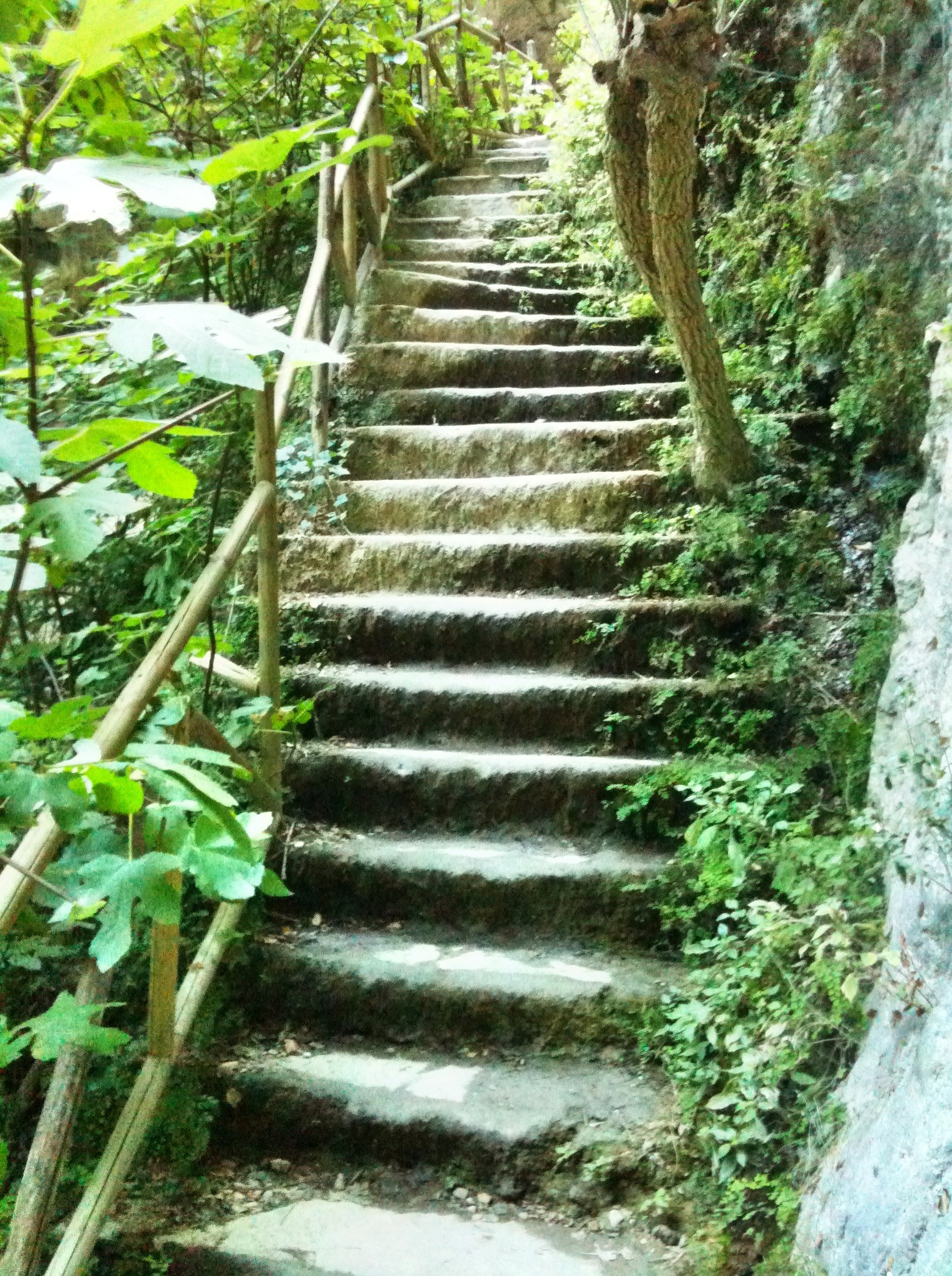
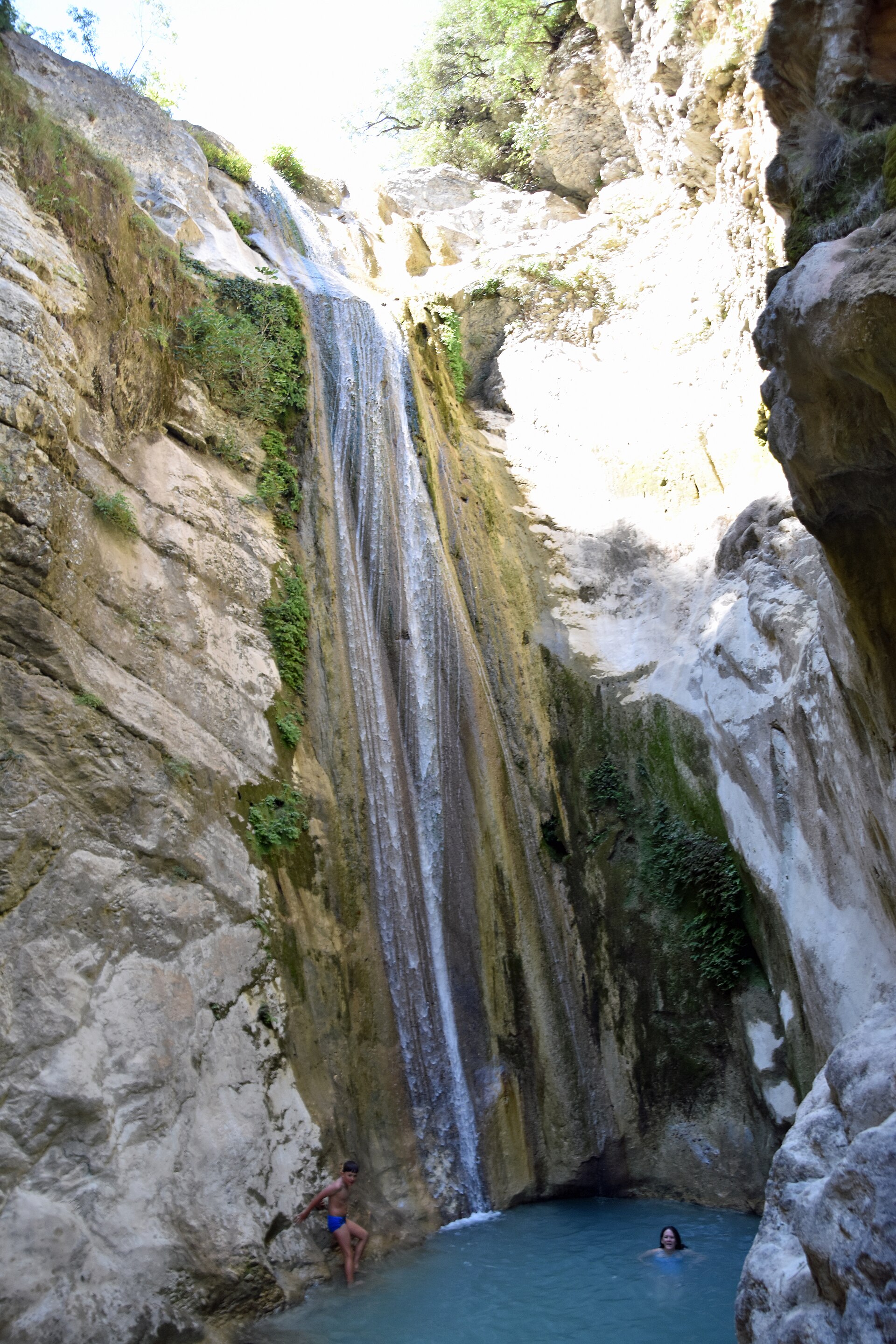
Those staying in Nikiana have close at hand one of Lefkada's most beloved excursions: the town of Nydri, a little further south, a departure point for boats to the strait's smaller islands such as Meganisi, Skorpios and Madouri, and for the trail that climbs the Dimosari gorge up to a series of waterfalls and natural pools set amid greenery. It is an excursion that allows one to alternate Nikiana's calm sea with the island's mountainous hinterland, made of shady gorges, small wooden bridges and cool water that flows year-round, even in the hottest months. For those seeking a contrast to days at the beach, it is one of the most recommended trips by anyone who knows this part of Lefkada well.
The cuisine of the seaside taverns
Nikiana's taverns offer classic Ionian cuisine, with a few local touches linked to fishing in the strait and farming in the hinterland: fresh grilled fish, octopus dried in the sun before being finished on the grill, shrimp saganaki, salads dressed with oil from the nearby hills and local cheeses such as graviera. The traditional Lefkada dishes are not missing either, such as tostounia, small local beans stewed, or desserts made with honey and dried fruit served at the end of the meal. The most common format remains the family-run tavern, with a simple, seasonal menu, where the catch of the day is often shown at the table before being cooked, in a convivial ritual typical of the whole Ionian coast.
Festivals, saints and community life
As in many villages of the Ionian Islands, Nikiana's community life still revolves around the Orthodox religious calendar, with the patron saint's feast day and the celebrations of local saints marked by church services followed by outdoor gatherings, folk music and traditional Lefkada dances. In summer, when the village's population multiplies with the arrival of Greek and European holidaymakers, the taverns occasionally organize evenings with live music, while the small processions to the chapel on the islet remain a moment felt especially by the older residents. It is on these occasions that the village, usually quiet, shows the most authentic face of its collective identity.
When to come and how to experience Nikiana
The ideal season to visit Nikiana runs from May to early October, with June and September offering the best balance between pleasant temperatures, warm sea and fewer crowds than in full August, when traffic on the coastal road to Nydri can become heavy. In winter the village empties out almost completely and many taverns close, but it remains a good time for those who want to see the olive harvest up close and experience the agricultural rhythm of the hinterland. Nikiana lends itself well to a multi-day stay in apartments or small sea-view residences, from which one can easily move both toward the town of Lefkada and toward Nydri and the south of the island, keeping as a base a genuine village, far from the more touristy atmospheres of the west coast.
FAQ
Come si raggiunge Nikiana?
Qual è il periodo migliore per visitare Nikiana?
Cosa vedere in un giorno a Nikiana e dintorni?
Dove si parcheggia a Nikiana?
Nikiana è adatta a famiglie con bambini?
Quanto tempo conviene restare a Nikiana?
Getting there
- Aeroporto di Aktion-Preveza (PVK), circa 30 km da Nikiana via il ponte che collega Lefkada alla terraferma
- Nessuna linea ferroviaria sull'isola; la stazione più vicina con collegamenti utili è quella di Patrasso, poi bus o auto
- Da Lefkada città seguire la strada costiera per Nydri: Nikiana si trova dopo circa 8 km, ben segnalata lungo il litorale.
- Chi arriva in bassa stagione trova più scelta di parcheggio libero vicino al molo; in agosto conviene arrivare presto al mattino per trovare posto vicino alle calette più piccole.
Perfect for
Acque calme e trasparenti dello stretto, ideali per nuotare senza onde e raggiungere a nuoto la cappella sull'isolotto di fronte al paese.
Uliveti secolari nell'entroterra, la laguna di Kariotes con i suoi uccelli acquatici e le gole verdi che portano alle cascate del Dimosari.
Taverne a conduzione familiare con pesce fresco, olio locale e piatti della tradizione lefkadita come il tostounia.
Le tracce paleocristiane di Episkopi e l'eredità agraria veneziana leggibile ancora oggi negli uliveti che circondano il paese.
Un ritmo lento, lontano dalla folla della costa occidentale, perfetto come base per esplorare Lefkada senza rinunciare alla tranquillità serale.