Lixouri
On the western shore of the Gulf of Argostoli, stretched across the Paliki peninsula like a sentinel gazing out to the open sea, s...
Updated 7 July 2026
The story
The story of Lixouri
The legacy of Pali and twentieth-century resilience
Lixouri's history has roots in antiquity, having grown up near ancient Pali, one of the four city-states that made up Kefalonia's tetrapolis. During the Venetian era, the town developed into a significant commercial and cultural centre, becoming a hub of attraction for nobles and intellectuals. However, the watershed moment of its modern history came in 1953, when an exceptionally powerful earthquake razed almost the entire urban area to the ground. Despite the loss of its original architectural heritage, the inhabitants did not give up, rebuilding Lixouri with a spirit of modernity that never renounced tradition. Today, walking among its buildings, one can feel this resilience: a town that has managed to reinvent itself while keeping its critical spirit and proverbial irony intact, traits that set it clearly apart from the rest of the island.
The Iakovatios Library: a treasure of paper and history
One of the few historic buildings to survive the 1953 tremors is the house of the Iakovatos family, which today houses the Iakovatios Library and Museum. This neoclassical building is a coffer of inestimable value, preserving a collection of over 30,000 volumes, including rare 16th- and 17th-century editions, precious manuscripts and finely crafted Byzantine icons. The library is not merely a repository of books, but a symbol of the high cultural level Lixouri achieved in centuries past. Visiting its rooms is like taking a leap back in time, among period furnishings and archives that recount the social and political life of the Paliki peninsula, confirming the intellectual vocation of a land that gave birth to thinkers and poets.
The monument to Andreas Laskaratos: the voice of satire
Strolling along the seafront, one comes across the statue of Andreas Laskaratos, Lixouri's most celebrated son. A satirical poet and free thinker of the nineteenth century, Laskaratos was a controversial figure who did not hesitate to sharply criticise the customs of his time and the hypocrisies of the clergy, for which he was excommunicated. The statue depicts him seated, his gaze turned toward the town and, tellingly, his back to Argostoli. This detail is no accident: it symbolises the eternal, good-natured rivalry between the two towns and the pride of the Lixouriotes, who consider themselves sharper and more independent-minded than their neighbours in the capital. It is an iconic spot where literary history meets popular identity.
The Church of Agios Charalambos and religious fervour
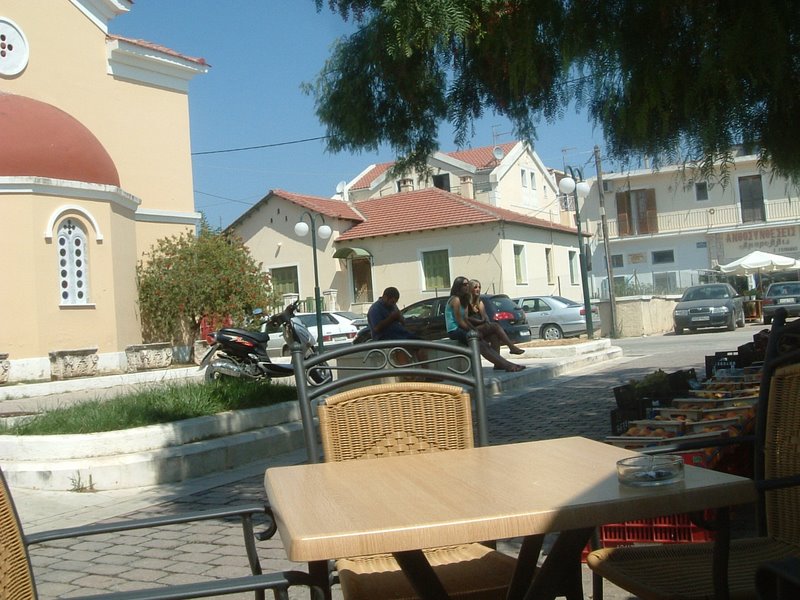
Dedicated to the town's patron saint, the Church of Agios Charalambos is a fundamental spiritual landmark for the community. Although the current building is the result of post-earthquake reconstruction, it holds within it icons and sacred furnishings of great value saved from the rubble. The saint's feast day, celebrated in February, turns Lixouri into a stage for processions, music and celebrations involving every resident. The church's architecture, with its soaring bell tower, dominates the town's skyline and represents the unbreakable bond between the population and its faith, lived with a participation that blends the sacred and the profane in an atmosphere of great charm.
The Philharmonic School: the musical heart of Paliki
Lixouri cannot be understood without listening to its music. The Philharmonic School of Pali, founded in 1836, is one of the oldest in Greece and represents the town's musical soul. Here, music is not a mere pastime but a founding element of education and social life. It is not unusual, while walking through the streets of the centre, to hear the notes of winds and percussion drifting from the rehearsal halls. The philharmonic band accompanies every public event, from religious ceremonies to Carnival, carrying forward a tradition that has made Lixouri famous throughout the Ionian archipelago. The school continues to train young talents, ensuring that the island's musical heritage stays alive and vibrant.
Xi Beach: the enchantment of red sand
A few kilometres south of Lixouri lies one of the most singular beaches in all of Greece: Xi Beach. What makes it unique is the colour of its sand, an intense ochre that veers toward brick-red, creating an extraordinary chromatic contrast with the clear blue of the sea. The beach is flanked by tall white clay cliffs, known for their therapeutic properties: it is common to see bathers smearing themselves with the greyish mud drawn from the rock for a natural, cost-free beauty treatment. Thanks to its shallow, sandy seabed, Xi is the ideal destination for families, while also offering a wild, primordial landscape that captivates every visitor.
The Petani coast: cliffs and sunsets
On the western side of the Paliki peninsula, nature becomes more theatrical and imposing. Here lies Petani, a beach of white pebbles and very fine sand set within a deep bay, surrounded by steep mountains covered in Mediterranean scrub. Often compared to the famous Myrtos, Petani offers waters in shades of turquoise and emerald that shift in intensity as the light changes. It is the perfect place to wait for sunset, when the sun disappears directly into the sea, tinting the sky purple and orange. The descent to the beach, with its scenic hairpin bends, offers spectacular views that alone justify the trip to this part of the island.
Surroundings and curiosities: Kounopetra and the Monastery of Kipoureon
Exploring the surroundings of Lixouri, one encounters places wrapped in myth and mystery. At Kounopetra, on the southern tip, stands the 'moving rock', a rock formation that once visibly swayed due to sea currents and tectonic movements (a phenomenon less evident today after the 1953 earthquake). Continuing westward, one reaches the Monastery of Kipoureon, isolated atop a high cliff plunging into the Ionian Sea. Founded in the 18th century, the monastery owes its name to the lush gardens once cultivated by the monks. Although today inhabited by only one monk, it remains a place of absolute peace, where the silence is broken only by the roar of the waves below.
Experiences not to be missed in Lixouri
- Take the local ferry from Argostoli at sunset to enjoy the view of the bay.
- Try a natural beauty treatment with the clay from the cliffs of Xi Beach.
- Taste the Mandola, the typical sweet made from caramelised almonds, at one of the pastry shops in the centre.
- Visit the village of Mantzavinata, celebrated for the excellence of its wine production.
- Attend a concert by the Philharmonic School during the summer festivities.
- Explore the hidden coves of the Paliki peninsula by renting a small boat.
Traditions, flavours and popular spirit
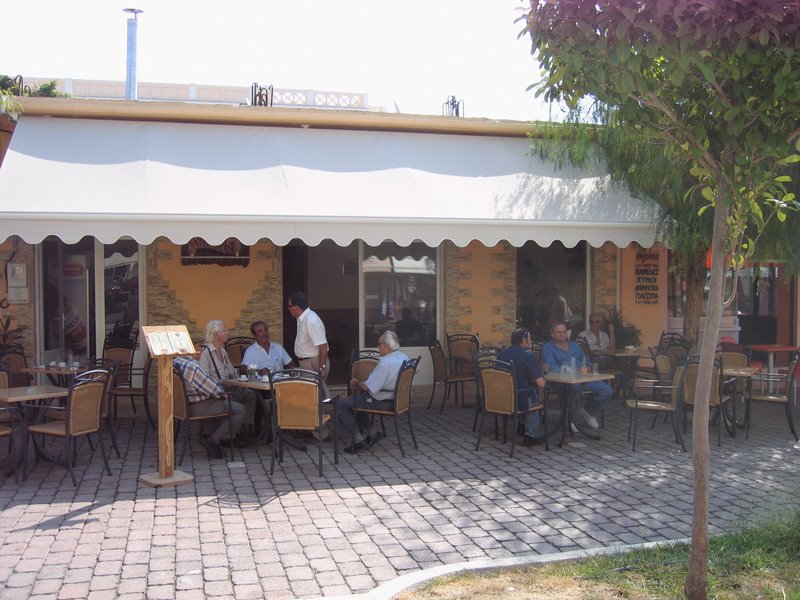
Lixouri's culture is a mosaic of Venetian influences and Greek traditions, seasoned with a proverbial sense of humour. Lixouri's Carnival is one of the most famous in the Ionian Islands, marked by parades of floats that often take aim at politicians and social life with biting satirical rhymes. At the table, the cuisine reflects the generosity of the Paliki land: be sure to try 'stifado' meat, savoury meat pies (kreatopita) and local cheeses such as feta and kefalotyri. Wine is another undisputed star, with the Robola grape variety finding here the ideal limestone soils, producing fresh, fragrant white wines that pair perfectly with dinners at the open-air taverns along the harbour.
When to go and how to experience the town
The best time to visit Lixouri runs from May to September, when the weather allows you to fully enjoy the beaches and evenings in the square. July and August are the liveliest months, full of cultural events and music festivals, but also the most crowded. For those seeking tranquillity, late spring offers spectacular blooms and ideal temperatures for hiking on the peninsula. Living Lixouri means adopting its rhythms: a slow breakfast with Greek coffee and 'patsavouropita' (filo pastry pie), an afternoon among the red waves of Xi, and an evening spent watching the ferries come and go while sipping a glass of local wine, feeling part of a community that never stops smiling in the face of adversity.
FAQ
Come si raggiunge Lixouri da Argostoli?
Qual è la spiaggia migliore per i bambini?
Cosa rende speciale la sabbia di Xi Beach?
Lixouri è adatta per una vacanza tranquilla?
Si può visitare la Biblioteca Iakovatios?
Getting there
- Aeroporto Internazionale di Cefalonia (EFL) - circa 40 km (via terra) o 10 km (tramite traghetto da Argostoli)
- Non sono presenti linee ferroviarie sull'isola.
- Dall'aeroporto o da Sami, seguire le indicazioni per Argostoli e poi per Lixouri. La strada costiera che circumnaviga il golfo offre panorami spettacolari.
- Il traghetto da Argostoli è molto economico e permette di caricare anche l'auto, risparmiando tempo e carburante.
Perfect for
Sede di una delle più antiche filarmoniche della Grecia, Lixouri vibra di note e tradizioni letterarie uniche.
Le spiagge di Xi e Lepeda offrono acque sicure e servizi ideali per chi viaggia con bambini piccoli.
Dalle sabbie rosse di Xi alle scogliere di argilla e la roccia mobile di Kounopetra, è un paradiso per gli amanti dei paesaggi insoliti.
To see