Lakka
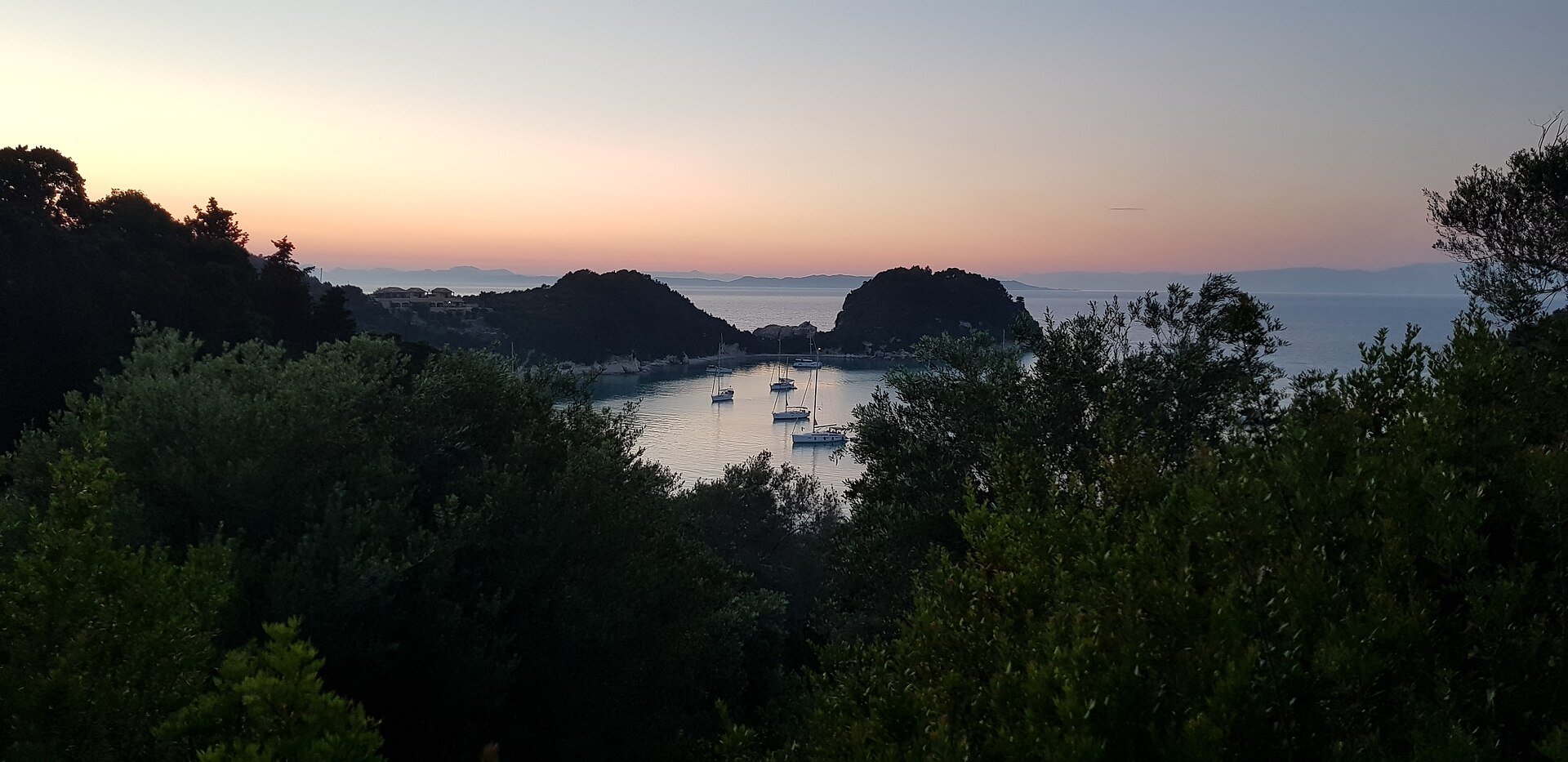
Lakka is not simply a harbor, but an embrace of sea that gently winds into the northern heart of Paxos, the smallest and perhaps t...
Updated 7 July 2026
This season · July · Summer
What to do in Lakka now
The story
The story of Lakka
Historical roots: from myth to the Serenissima
The history of Lakka is inextricably linked to that of the island of Paxos, which according to mythology was created by Poseidon. The god of the sea, wishing for a love nest for himself and the nymph Amphitrite, broke off the southern tip of Corfu with his trident. Beyond the myth, Lakka has experienced centuries of strategic passages. After the Byzantine period and pirate raids, it was the Republic of Venice that left the deepest mark starting from the 14th century. The Venetians not only fortified the area but transformed the local economy by encouraging olive cultivation, creating that silver forest which still dominates the landscape today. Later, the village passed under French and then British control, becoming part of the United States of the Ionian Islands, before its definitive union with Greece in 1864. This cultural stratification is visible in the civil architecture and in the local dialect, which still preserves echoes of Italian terms.
The Church of Ipapanti: a jewel among the olive trees
Not far from the town centre, immersed in an almost mystical stillness, stands the Church of Ipapanti (of the Purification). Originally built in the 17th century, this structure represents one of the finest examples of religious architecture on the island. What makes it extraordinary is its distinctive tower bell and the presence of two domes, a rarity in the Ionian Islands that testifies to the meeting of Byzantine tradition and Western influences. Inside, the atmosphere is dense with spirituality, with a finely carved wooden iconostasis and icons that show the signs of time yet retain a magnetic expressive intensity. The church is not only a place of worship but an identity landmark for the inhabitants of Lakka, who here celebrate their most heartfelt feasts, keeping alive centuries-old traditions that bind faith to land and sea.
The Akra Grammatiko Lighthouse: sentinel of the Ionian
At the far tip of the headland that closes the bay of Lakka to the north, stands the Akra Grammatiko Lighthouse. Built at the end of the 19th century, this stone guardian dominates a vertiginous cliff that plunges into the blue. The lighthouse is a place of poignant beauty, especially at sunset, when the fiery light of the sun disappears behind the horizon, illuminating in the distance the coasts of Epirus and the southern outline of Corfu. Reachable via a scenic path that winds between dry-stone walls and Mediterranean scrub, the lighthouse tells of Lakka's vital importance for navigation in the strait. It is the ideal place to understand the wild geography of the island, where the white limestone rock contrasts violently with the dark green of the vegetation and the clear blue of the sky.
The Ypapanti Cave: refuge of legends and nature
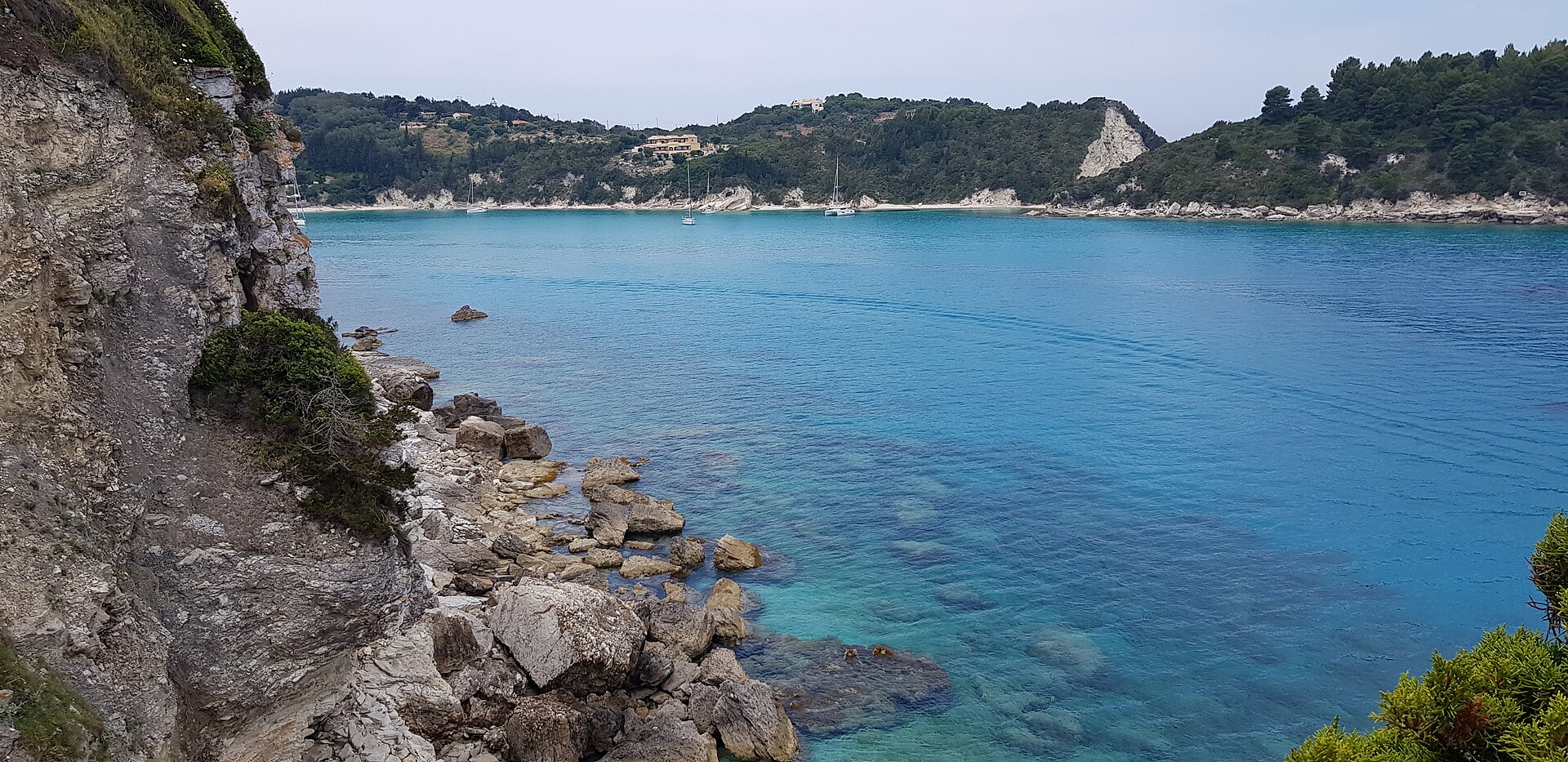
Along the western coast, not far from Lakka, opens the majestic Ypapanti Cave. It is a marine cavity of imposing proportions, accessible only by sea, which takes its name from the nearby church. The cave is famous not only for its crystal-clear waters and the plays of light filtering through the natural openings, but also for a historical anecdote dating back to the Second World War: it is said that the Greek submarine Papanikolis took refuge right inside these rocky walls to escape the sight of enemy radar. Visiting the cave means entering a natural sanctuary where the sound of the sea echoes against the tall limestone vaults, creating a unique sensory experience that combines geology, military history and popular legend.
Silk beaches: Kanoni and Harami
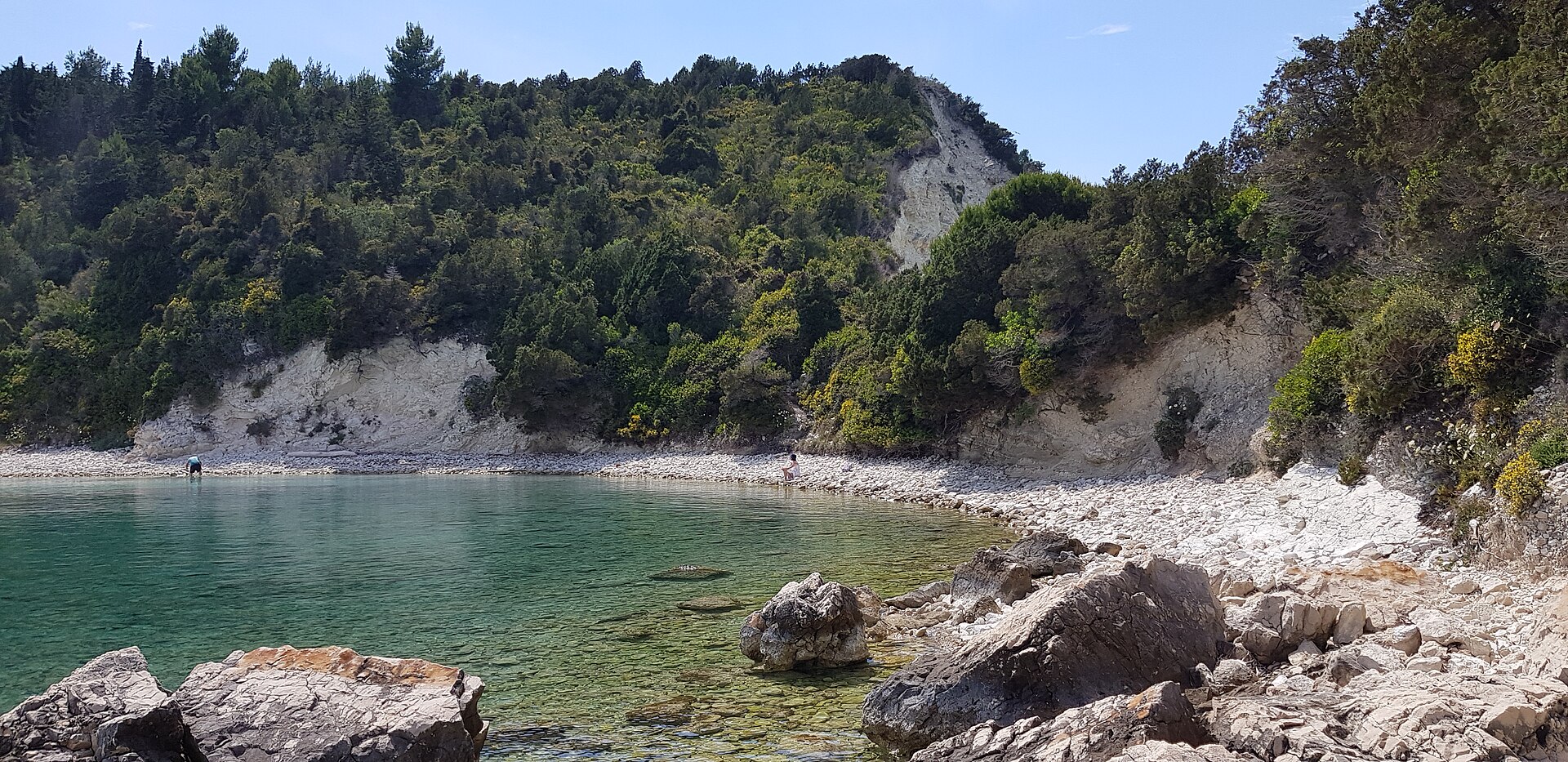
The beaches of Lakka are small paradises of white pebbles and fine sand, set within the greenery. Kanoni and Harami are the pearls of the bay, reachable with a short and pleasant walk from the harbour. Harami, the more inland of the two, is famous for its sandy seabed which gives the water an almost hypnotic transparency, similar to that of a natural pool. Kanoni, slightly more exposed, offers pockets of natural shade thanks to the trees that reach almost down to the water. These beaches are not only places of relaxation but intact ecosystems where you can snorkel while admiring the rich underwater life. Their peculiarity lies in the bay's microclimate: the waters are almost always calm and warm, making them ideal for those seeking slow, restorative bathing, far from the currents of the open Ionian Sea.
The agrarian landscape: Lakka's green gold
The hinterland of Lakka is a living monument to heroic agriculture. The hills are entirely shaped by the 'pezoulia', the typical stone terraces that support thousands of centuries-old olive trees of the Lianolia variety. These trees, with gnarled and twisted trunks that look like natural sculptures, produce one of Greece's finest olive oils, characterized by a fruity flavour and very low acidity. Walking among these olive groves means following ancient mule tracks that connect Lakka to the inland hamlets, discovering old stone olive presses (the 'tripsana'), now disused but full of charm. The landscape is completed by slender cypresses and patches of wild sage and thyme, which perfume the air and make every walk an unforgettable aromatic experience.
Traditions and flavours: the table of Lakka
Lakka's gastronomic culture reflects its dual soul, both rural and maritime. Besides the famous oil, the local cuisine stands out for 'Savoro', a dish of fried fish preserved in a marinade of vinegar, rosemary and raisins, a typical Venetian legacy. In the taverns overlooking the harbour, grilled octopus and fresh squid are a must, often accompanied by local wine, a dry white produced in small quantities in the island's vineyards. One cannot leave Lakka without having tasted thyme honey and almond-based sweets. Popular culture is still alive during religious festivals, where traditional dances such as the 'Syrtos' are danced and communal meals are shared, celebrating the unbreakable bond between the community and the fruits of its generous land.
Living Lakka: when to go and what to do
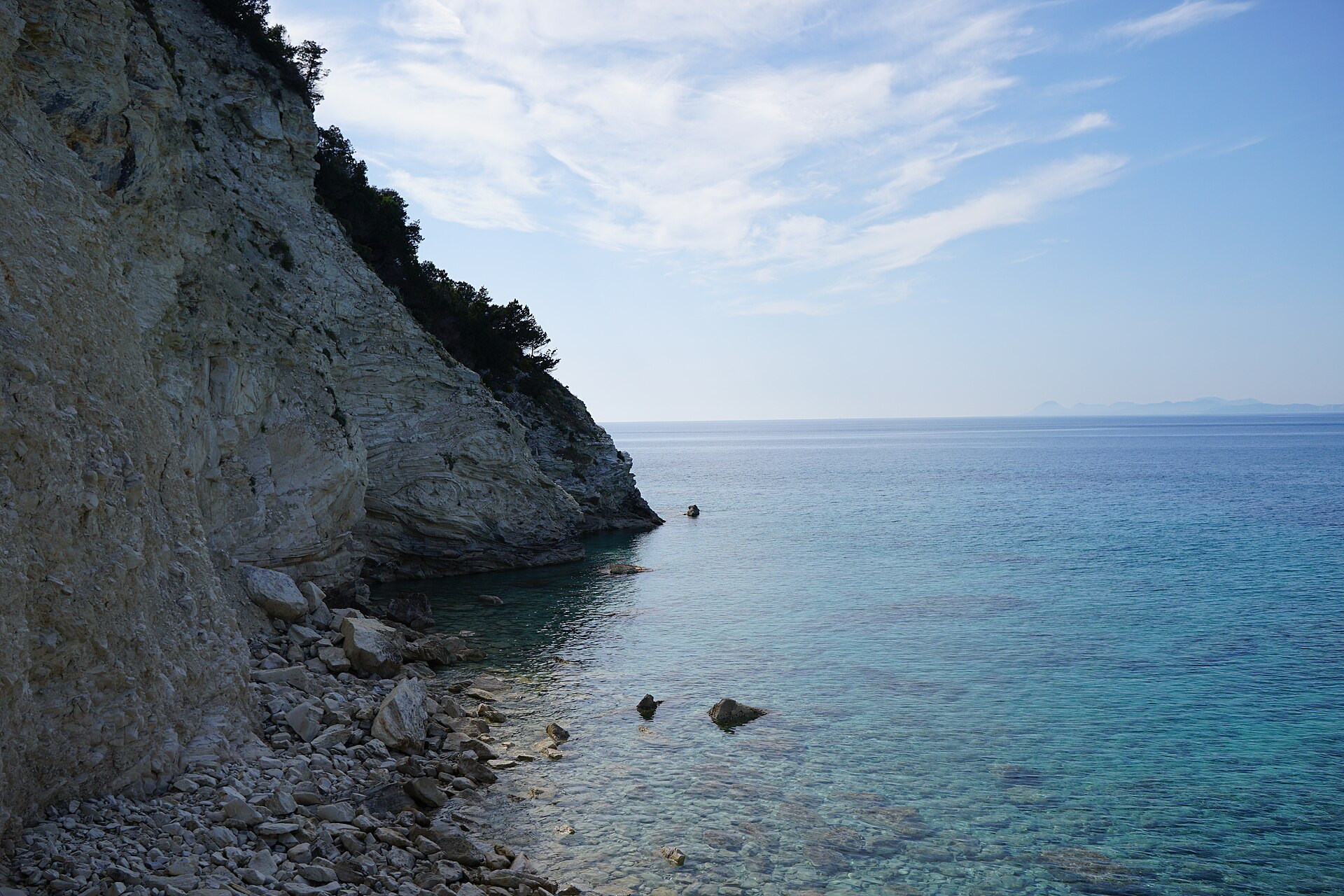
To fully experience the essence of Lakka, the ideal period is late spring or early autumn. May and June offer spectacular blooms and mild temperatures, while September brings warm sea and a more intimate atmosphere, ideal for those seeking contemplation. The essential Lakka experience is renting a small motorboat: only this way can you explore the isolated coves of the northern coast and enjoy the view of the village from the sea. In the evening, life concentrates along the waterfront, where bars and restaurants light up, creating a golden reflection on the calm waters of the bay. It is a place where luxury is not ostentation, but the possibility of enjoying a perfect simplicity in a natural setting of rare harmony.
- Renting a boat to explore the sea caves of the western coast.
- Walking the path leading to the Akra Grammatiko lighthouse at sunset.
- Tasting Savoro fish in one of the historic harbourside taverns.
- Visiting the twin-domed Church of Ipapanti nestled among the olive trees.
- Snorkeling in the turquoise waters of Harami beach.
- Getting lost among the alleys (kantounia) of the village, admiring the Venetian architecture.
FAQ
È possibile visitare Lakka in giornata da Corfù?
Le spiagge di Lakka sono adatte ai bambini?
Come ci si sposta all'interno di Lakka e verso il resto dell'isola?
Dove si può parcheggiare a Lakka?
Getting there
- Aeroporto Internazionale di Corfù (CFU) - collegato via mare
- Non presenti sull'isola
- Dall'aeroporto di Corfù si raggiunge il porto e si prosegue con aliscafo (Flying Dolphin) o traghetto per Gaios, poi bus o taxi per Lakka.
- Prenotate il traghetto o l'aliscafo con anticipo nei mesi estivi, poiché i posti sono limitati data la dimensione ridotta dei mezzi.
Perfect for
Lakka è uno dei porti naturali più sicuri e suggestivi dello Ionio, meta d'elezione per i velisti di tutto il mondo.
Perfetta per chi cerca una vacanza lenta, tra passeggiate negli uliveti secolari e bagni in acque cristalline.
Un paradiso per gli amanti della cucina mediterranea autentica, basata su olio extravergine d'eccellenza e pesce freschissimo.