Laganas
Every night, between May and October, something happens on the sands of Laganas that decades of sunbeds and beach bars have failed...
Updated 8 July 2026
This season · July · Summer
What to do in Laganas now
The story
The story of Laganas
From agricultural origins to the tourism boom
Before becoming synonymous with summer holidays, Laganas was a small rural village in the south-western hinterland of Zakynthos, tied to olive and vine cultivation like much of the island's villages. Zakynthos itself has a layered history: an ancient Greek colony, a Byzantine possession, then a Venetian dominion for over three centuries, French and Russo-Ottoman occupation, and finally a British protectorate before union with Greece in 1864. Of this complex history Laganas preserves little in monumental terms, having paid, like the whole island, the price of the devastating 1953 earthquake, which razed much of Zakynthos's historic buildings to the ground. The modern village is therefore mostly a child of the tourism boom of the 1970s and 1980s, when the beauty of the bay and its golden sand began attracting the first northern European visitors, sparking a building and commercial growth that completely reshaped the village's face.
The Bay of Laganas and the Zakynthos National Marine Park
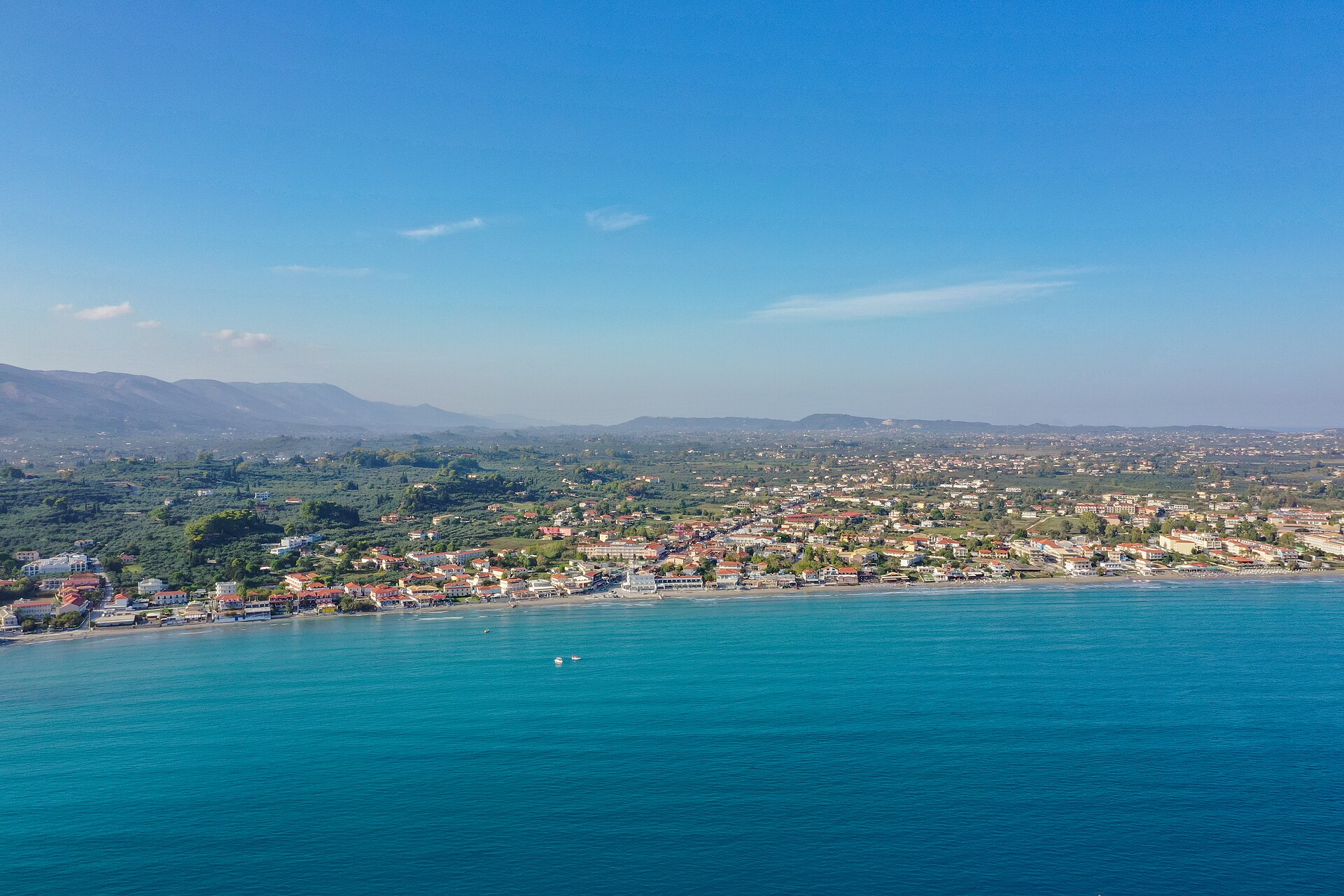
The Bay of Laganas is a wide, shallow inlet that stretches for several kilometres along the southern coast of Zakynthos, from the Kalamaki area to Porto Zoro. Its warm waters and fine sand make it an ideal habitat for the nesting of the loggerhead turtle, the most widespread sea turtle in the Mediterranean: it is estimated that one of Europe's most important breeding colonies is concentrated here. To protect it, the Zakynthos National Marine Park (Ethnikos Thalassios Parkos Zakynthou) was established in 1999, regulating swimming, boating and night-time lighting on certain stretches of beach during the nesting season. An experience that combines the sea with environmental awareness, with information panels, marked protected areas, and the chance to observe, discreetly and from a distance, the nests fenced off by volunteers.
Marathonisi, the turtle-shaped islet
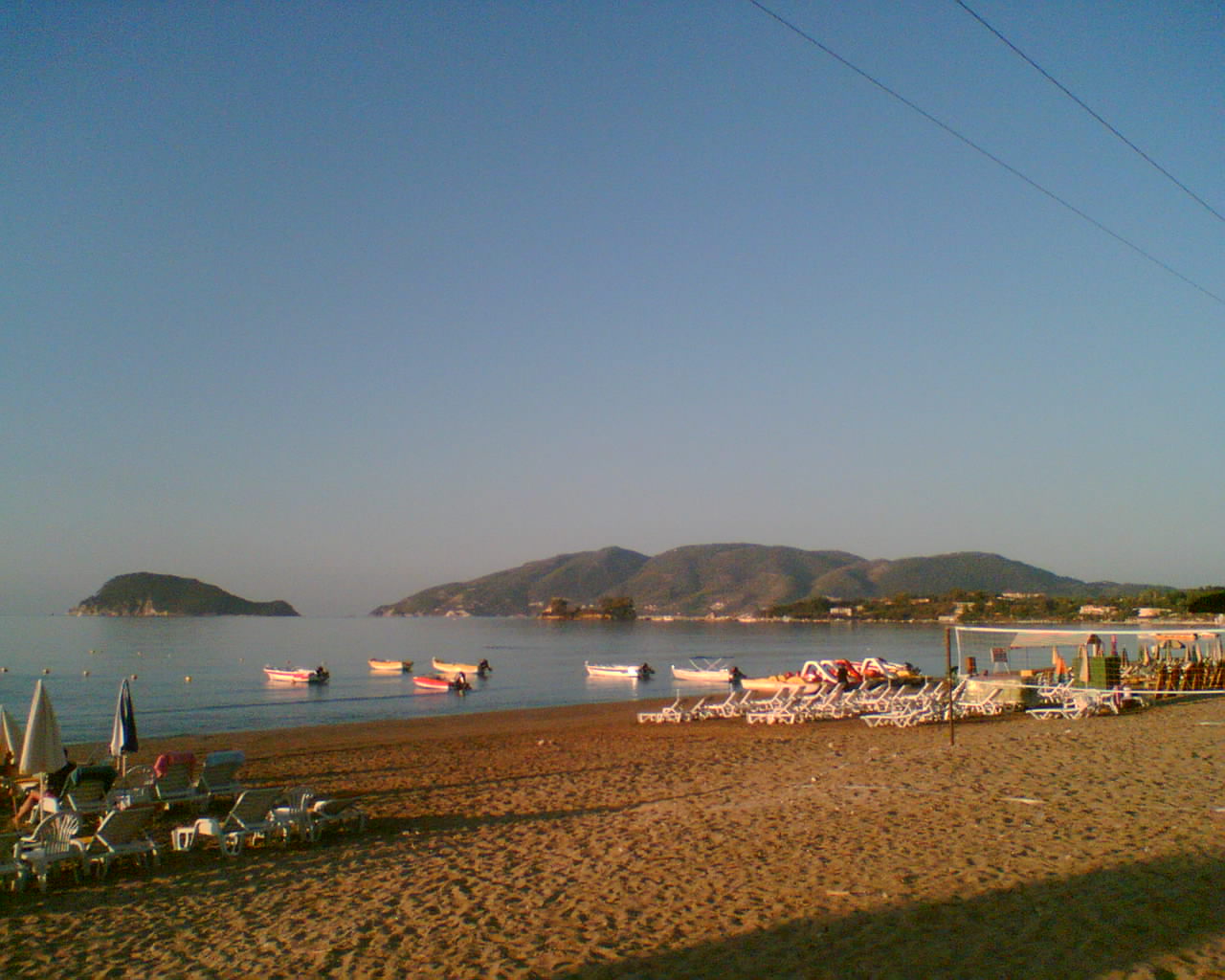
Off the Bay of Laganas rises Marathonisi, an uninhabited islet whose profile, seen from above, has made it famous as the 'turtle island': its outline indeed resembles a loggerhead turtle swimming out to open sea. Covered in pines and surrounded by shallow turquoise waters, it is a classic destination for boat trips from Laganas and Agios Sostis, with stops for swimming in its sandy coves and, for those with luck and patience, the chance to spot turtles approaching the boats in search of food. Nearby opens the local version of the Blue Caves, while the islet itself, devoid of settlements, remains a small natural sanctuary integrated within the perimeter of the marine park.
Kalamaki and the other villages of the bay
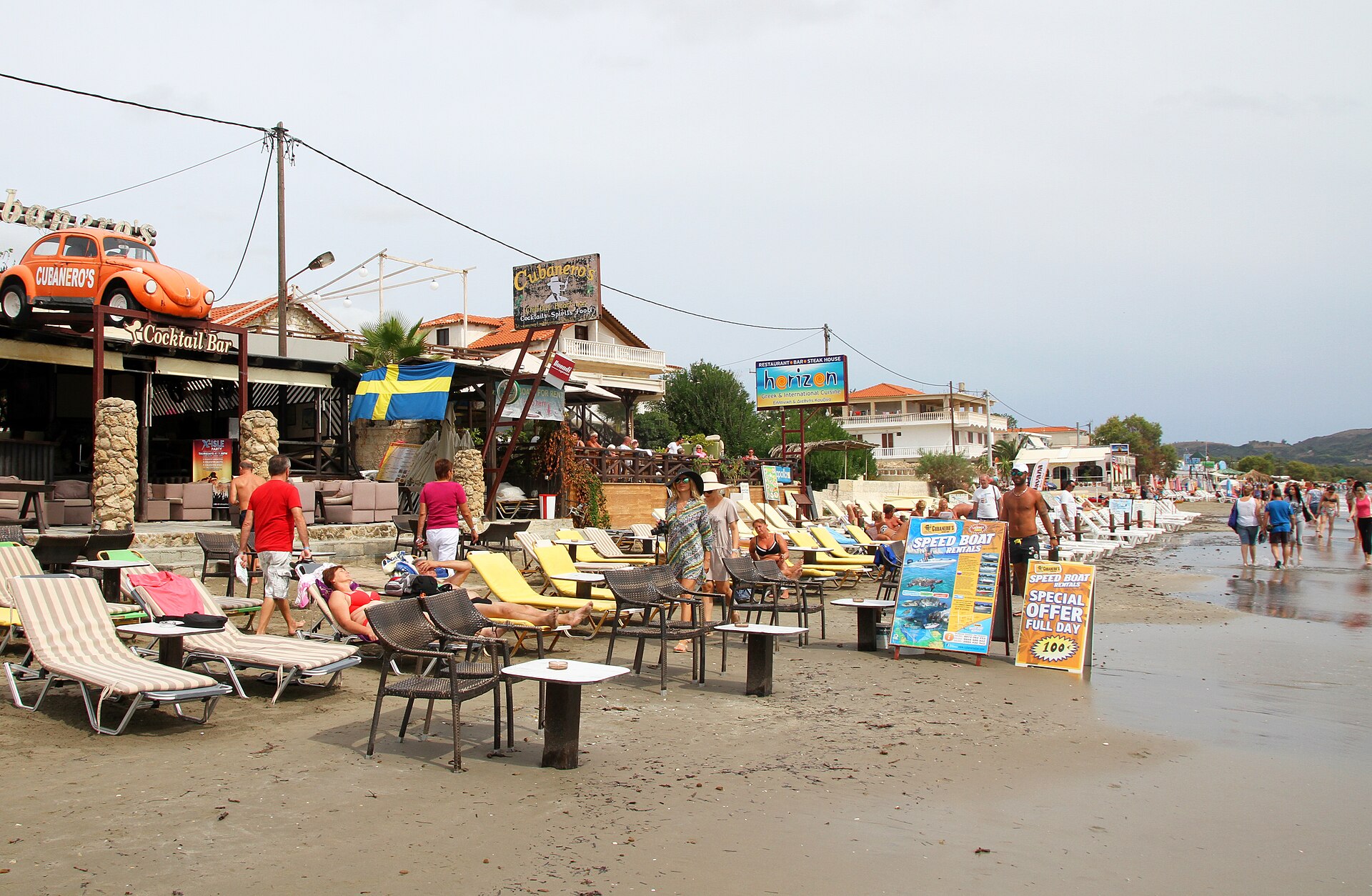
A few minutes from Laganas, Kalamaki shares the same beach and the same commitment to protecting the turtles, but with a quieter, more family-oriented atmosphere, less focused on nightlife. Further inland lie Argassi, another stronghold of Zakynthian seaside tourism but on a different stretch of coast, and the small farming villages of Kalithea and Lithakia, where centuries-old olive groves and low houses remain the dominant landscape outside the tourist season. These smaller centres reveal the more authentic and less crowded face of the hinterland, with village taverns, Orthodox churches with white bell towers, and the everyday life of an island that still lives, in part, off agriculture.
The streets and nightlife of Laganas
Laganas's main street, running parallel to the beach, is the commercial heart of the village: an unbroken succession of bars, venues with live music, multi-ethnic restaurants, ice-cream parlours and souvenir shops that, late in the evening, turn the village into one of the hubs of nightlife in the Ionian Islands, drawing a mostly young crowd attracted by one of the most intense entertainment offerings in insular Greece. By day the atmosphere shifts register: the same street hosts quad and dinghy rentals, agencies organising boat trips to Marathonisi and the Blue Caves, and quieter spots for breakfast. This dual identity, daytime and nighttime, is probably the village's most recognisable trait.
The beaches of the bay
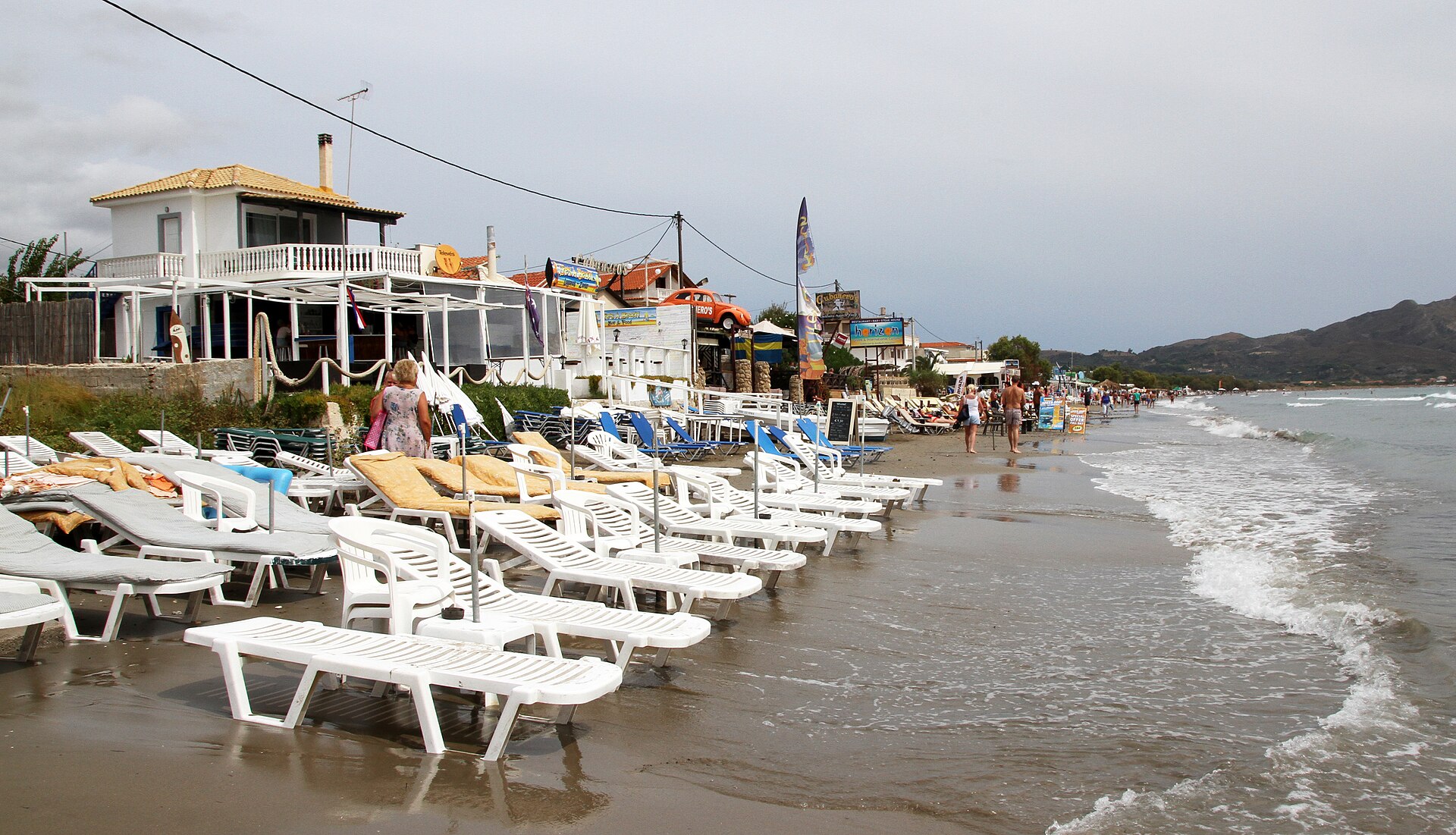
- Laganas Beach: a long stretch of fine sand, shallow seabed ideal for families, partly protected during the nesting season
- Kalamaki Beach: the natural continuation of the bay, quieter, with areas reserved for the turtles
- Marathonisi: beaches reachable only by boat, shallow and crystal-clear waters
- Gerakas: at the southern end of the bay, among the most important nesting beaches, access regulated
- Porto Zoro: a small secluded inlet to the east, less touristy
Boat trips, caves and snorkelling
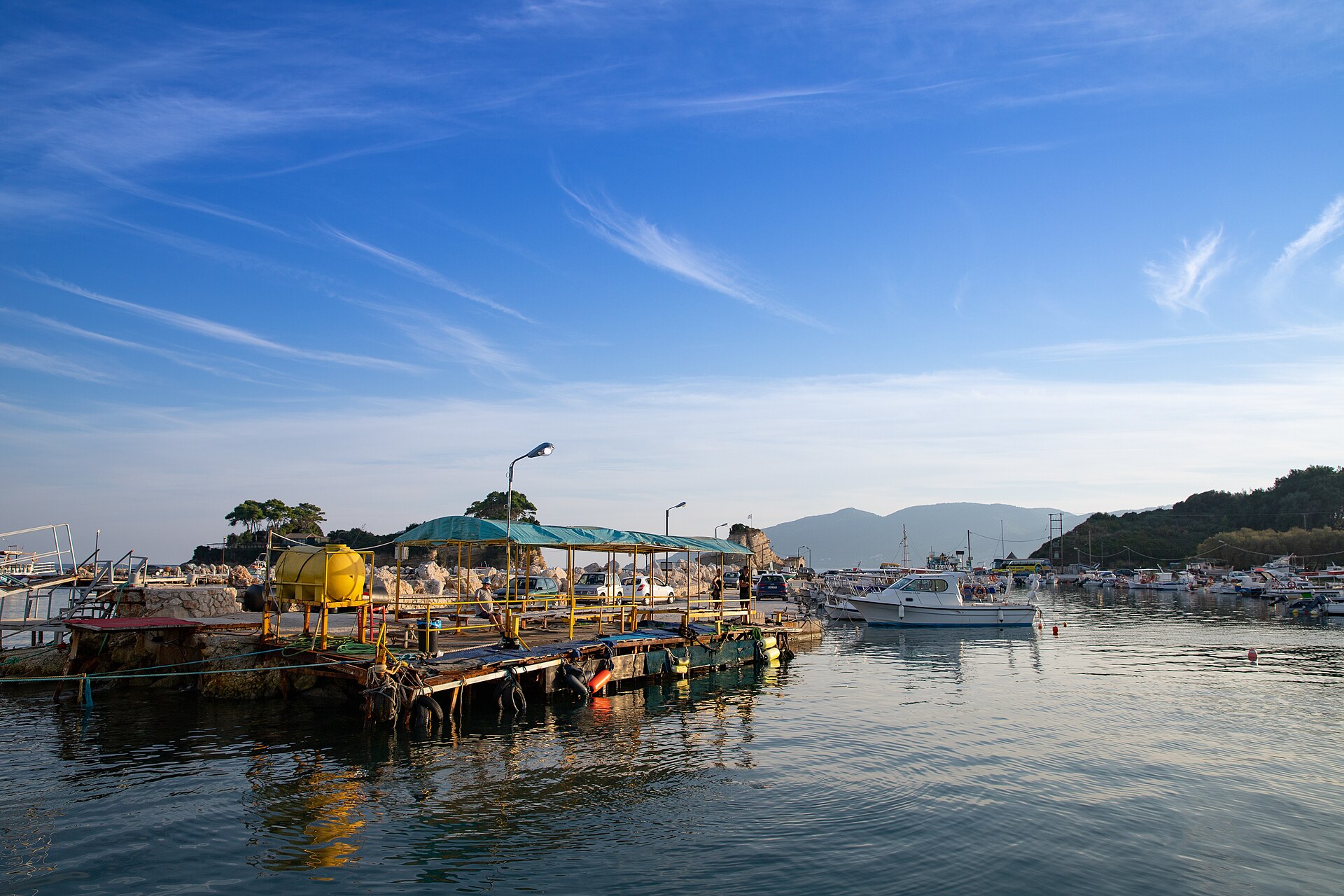
From the small harbour of Agios Sostis and the moorings of Laganas, glass-bottom boats and traditional caiques depart daily bound for Marathonisi and the blue caves of the south-western coast, where light filters through the water creating shimmering reflections between azure and emerald. Many tours combine a swimming stop on the islet with a slow passage through the bay to observe the turtles, accompanied by guides who remind passengers of the rules for respecting wildlife: no diving near the animals, no disturbing noise, safe distance. For those who prefer to explore independently, dinghies and small motorboats can be rented without a boating licence within certain power limits, a different way to explore the coast's less accessible coves.
The hinterland and the landscape of Zakynthos
Behind Laganas the landscape changes quickly: the plains planted with olive trees and vines soon give way to hills rising towards the centre of the island, crowned by the remains of the Venetian castle of Zakynthos and by mountain villages that still produce the celebrated Zakynthian extra-virgin olive oil. The contrast between the crowded bay and this quiet hinterland, dotted with monasteries and small white churches, is one of the reasons it's worth renting a car and getting away from the coast even just for an afternoon: it takes only a few kilometres to find a completely different island, made up of terraces, centuries-old olive groves and small villages where time still runs to the rhythm of farming.
Flavours and Zakynthian cuisine
Zakynthian cuisine has its roots in the Ionian peasant tradition, with clear Venetian influences in dishes such as 'sartsa' (a spiced beef ragù) or the baked pasta dish that recalls pastitsada. There is no shortage of the typical local cheese, ladotyri, matured in oil, and mandolato, almond and honey sweets found throughout the island. In Laganas's restaurants, alongside international cuisine aimed at mass tourism, there are still taverns serving fresh fish from the bay, salads with local, zero-kilometre olive oil, and wines produced in the hinterland vineyards, often from native varieties such as skiadopoulo or verdea, the historic Zakynthian white wine already appreciated in Venetian times.
When to go and how to experience Laganas
Laganas's tourist season runs from May to October, with the peak in crowds and nightlife between July and August, when temperatures easily exceed thirty degrees and the beach is packed. Those seeking a balance between warm seas and greater tranquillity may prefer June or September, months in which the bay remains swimmable but the village is less congested and prices are lower. It's worth remembering that between late May and October some stretches of beach are subject to evening restrictions to protect turtle nests: finding out about the open areas is an integral part of a respectful and mindful visit to the place.
A fragile balance between tourism and conservation
Few places in Greece show so clearly the tension between tourism development and environmental protection. The associations that have fought since the 1980s for the protection of the loggerhead turtle secured the establishment of the marine park, but coexistence with sunbeds, music and boat traffic remains a live issue, debated every summer by local authorities and international organisations. For the visitor, this translates into a few simple rules to follow — lights off on the beach at night, keeping a distance from turtles in the water, paying attention to nest signage — which allow one to enjoy the bay without compromising the balance that makes it unique.
FAQ
Come arrivo a Laganas?
Quando è meglio andare a Laganas?
Cosa vedere a Laganas in un giorno?
Le spiagge di Laganas sono adatte alle famiglie?
Si può vedere la caretta caretta senza disturbarla?
Dove parcheggiare a Laganas?
Getting there
- Aeroporto Internazionale di Zante 'Dionysios Solomos' (ZTH), circa 7-8 km da Laganas
- Zante non ha collegamenti ferroviari; da Città di Zante (Zakynthos Town) si raggiunge Laganas in circa 20-25 minuti seguendo la strada litoranea verso sud. In alternativa si arriva in traghetto da Kyllini (Peloponneso) fino al porto di Zante e poi in auto o taxi.
- In alta stagione noleggiare un'auto o uno scooter conviene per esplorare l'entroterra e le spiagge minori come Gerakas e Porto Zoro, meno servite dai bus locali.
Perfect for
Sabbia fine e acque basse lungo tutta la baia, ideali per famiglie e bagni prolungati.
Il Parco Nazionale Marino di Zante protegge una delle colonie di caretta caretta più importanti d'Europa.
La via principale del paese è tra i poli più vivaci delle Ionie per locali, musica e intrattenimento serale.
Gite verso Marathonisi e le grotte blu, tra snorkeling e avvistamento tartarughe.
Uliveti, vigneti autoctoni e taverne di paese a pochi chilometri dalla costa affollata.
To see