Gaios
Arriving at Gaios means gently sliding into an embrace of sea and stone, an experience that begins long before you set foot on lan...
Updated 7 July 2026
This season · July · Summer
What to do in Gaios now
The story
The story of Gaios
A history carved by myth and sea
The genesis of Gaios and of the whole island of Paxos is wrapped in legend: it is said that Poseidon, wishing to create a refuge of love for himself and the nymph Amphitrite, struck the southern tip of Corfu with his trident, breaking off a fragment. Beyond the myth, the history of Gaios is a mosaic of dominations that have left indelible marks. After the Byzantine period and the pirate raids that plagued the Middle Ages, the island came under the control of the Most Serene Republic of Venice in 1386. The Venetians ruled for over four centuries, profoundly influencing the architecture, agriculture — with the massive introduction of olive trees — and local culture. There followed brief but significant French and Russian interludes, before the British protectorate that lasted until 1864, the year in which Paxos, together with the other Ionian Islands, finally joined modern Greece. This crossroads of peoples has made Gaios a cosmopolitan town, where neoclassical order meets Mediterranean warmth.
The Church of Agioi Apostoloi
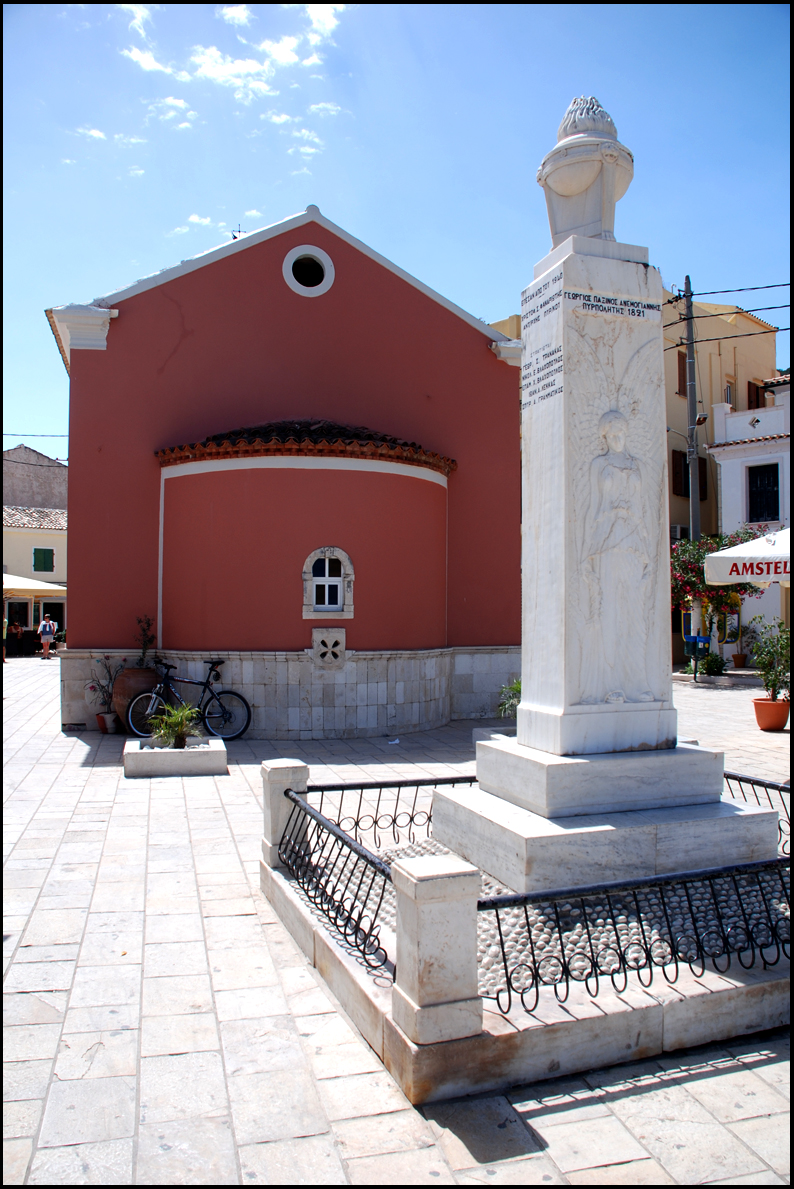
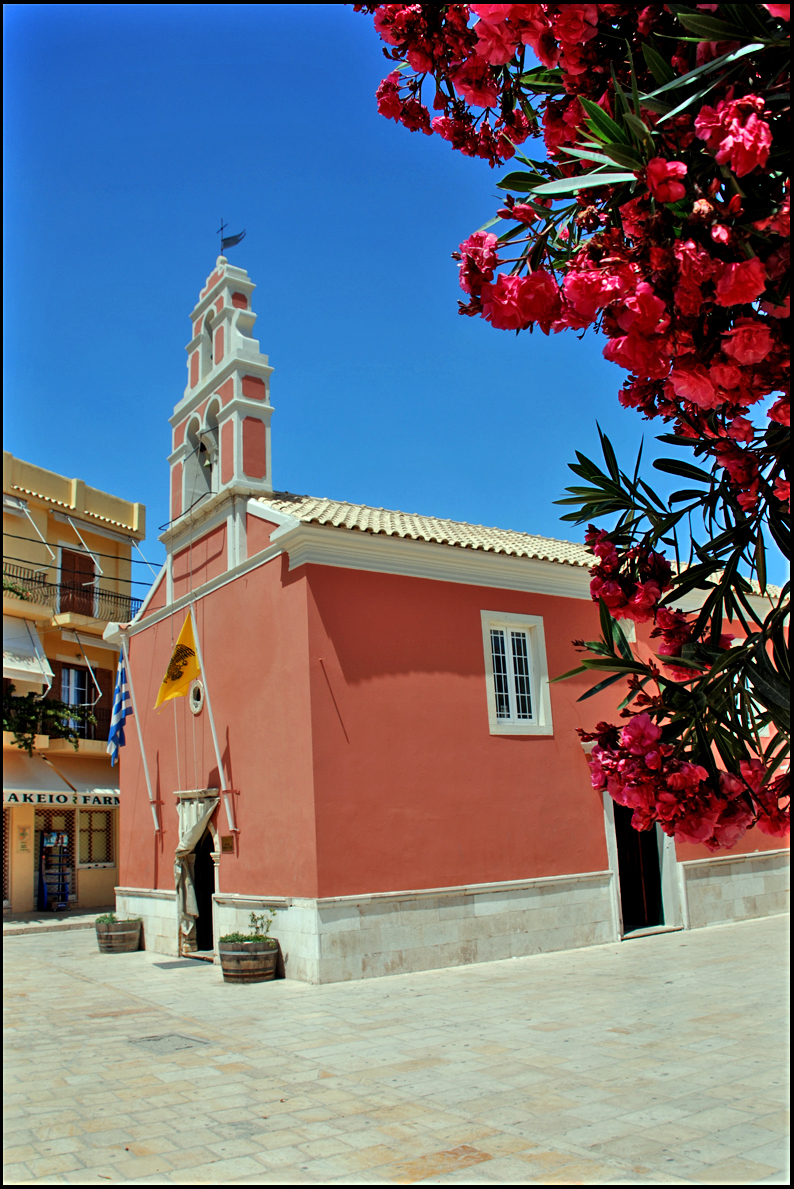
Located just behind the main square, the Church of the Holy Apostles is the spiritual heart of Gaios. This building immediately stands out for its Pompeian-red facade, a warm shade that contrasts magnificently with the blue of the Ionian sky. Built in a style blending Byzantine elements with Venetian baroque influences, the church houses within it fine icons and frescoes of the Cretan-Ionian school, testimony to the artistic wealth that flourished in the archipelago in past centuries. The bell tower rises above the town's rooftops, serving as a landmark for sailors. Attending a religious service here, especially during Orthodox feasts, allows visitors to immerse themselves in an atmosphere of ancient solemnity, where the chanting of psalms and the scent of incense carry the visitor into a timeless dimension, far from the bustle of the harbor.
The Venetian Fortress of Agios Nikolaos
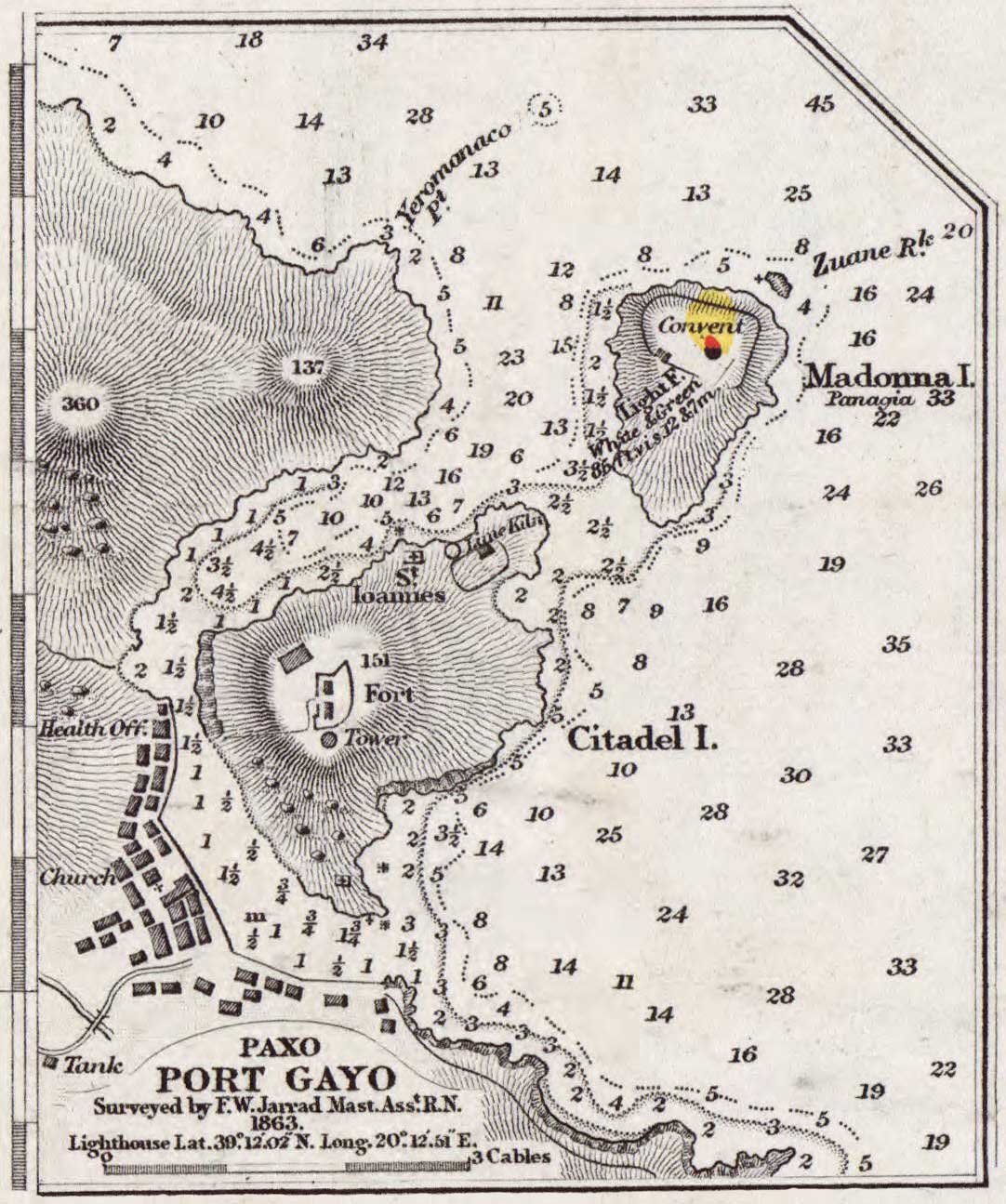
The islet of Agios Nikolaos, which closes off the harbor of Gaios turning it into a safe channel, holds the remains of an imposing Venetian fortress built starting in 1423. Local legend, supported by some historical studies, suggests that the original design may have been based on drawings by Leonardo da Vinci, sent to fortify Venetian territories against the Ottoman advance. Although today the structure is largely in ruins and partly reclaimed by wild vegetation, it retains a decadent and mysterious charm. Exploring its walls means walking among ancient bastions, water cisterns and artillery positions that once guarded access to the island. From the top of the fortress there is an unrivaled view over Gaios and the open sea, a privileged vantage point that reveals the strategic importance this small strip of land held for centuries along the trade routes of the Adriatic and the Ionian.
The Museum of Paxos
Housed in an elegant neoclassical building from 1906 that once served as a school, the Museum of Paxos is an essential stop for anyone wishing to understand the island's deep soul. The collection is an anthropological journey ranging from prehistoric and classical finds to everyday objects from the 19th and 20th centuries. Among the rooms one can admire ancient olive presses, farming tools, traditional costumes and a rich photographic record depicting the Gaios of the past. Particularly interesting is the section devoted to olive oil production, Paxos's true 'golden resource', with detailed explanations of the extraction techniques that have sustained the local economy for generations. The museum is not just a repository of objects, but a living account of the toil and hopes of an island community that has managed to draw sustenance from a rocky, difficult land.
The Statue of Georgios Anemogiannis
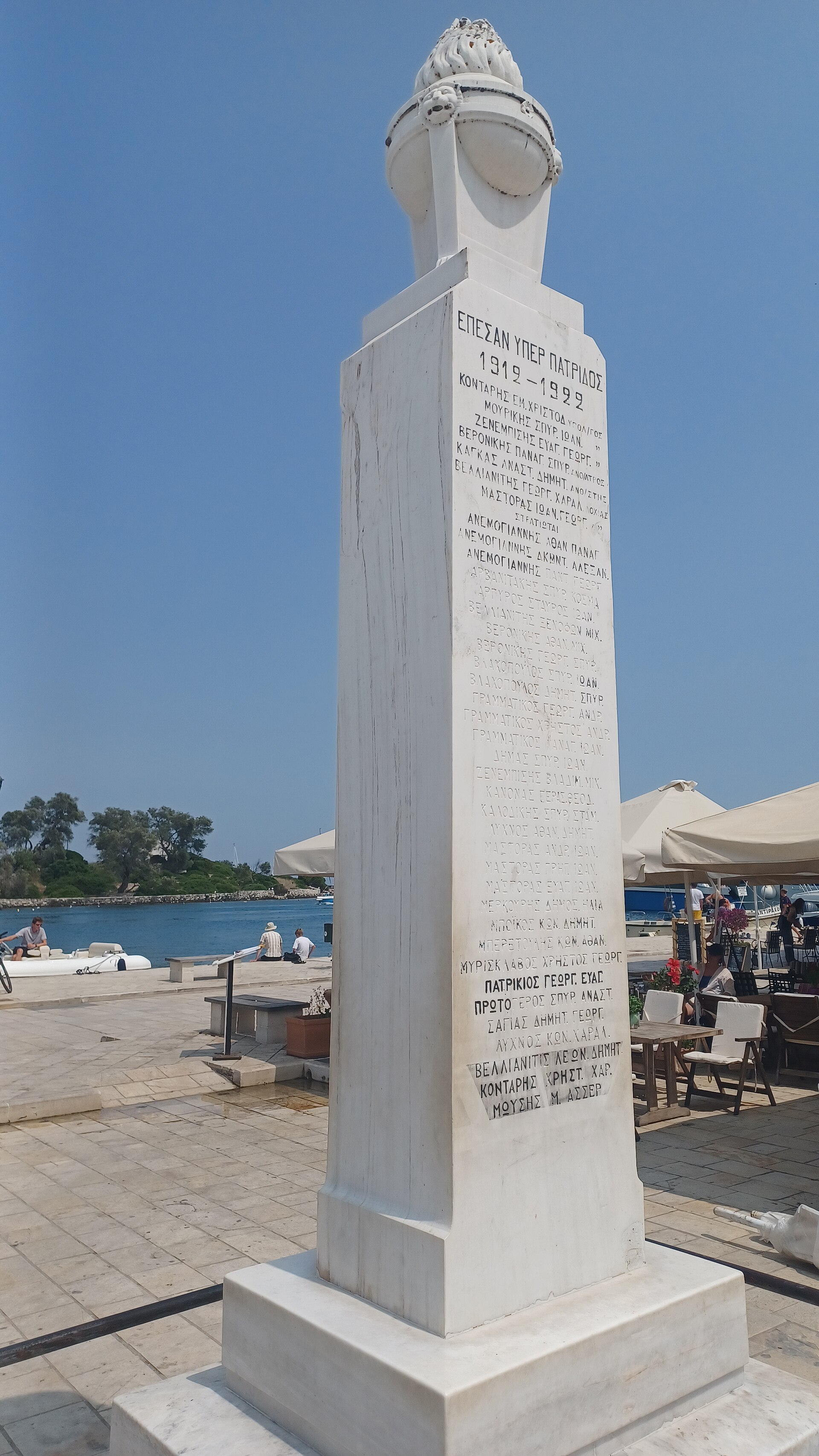
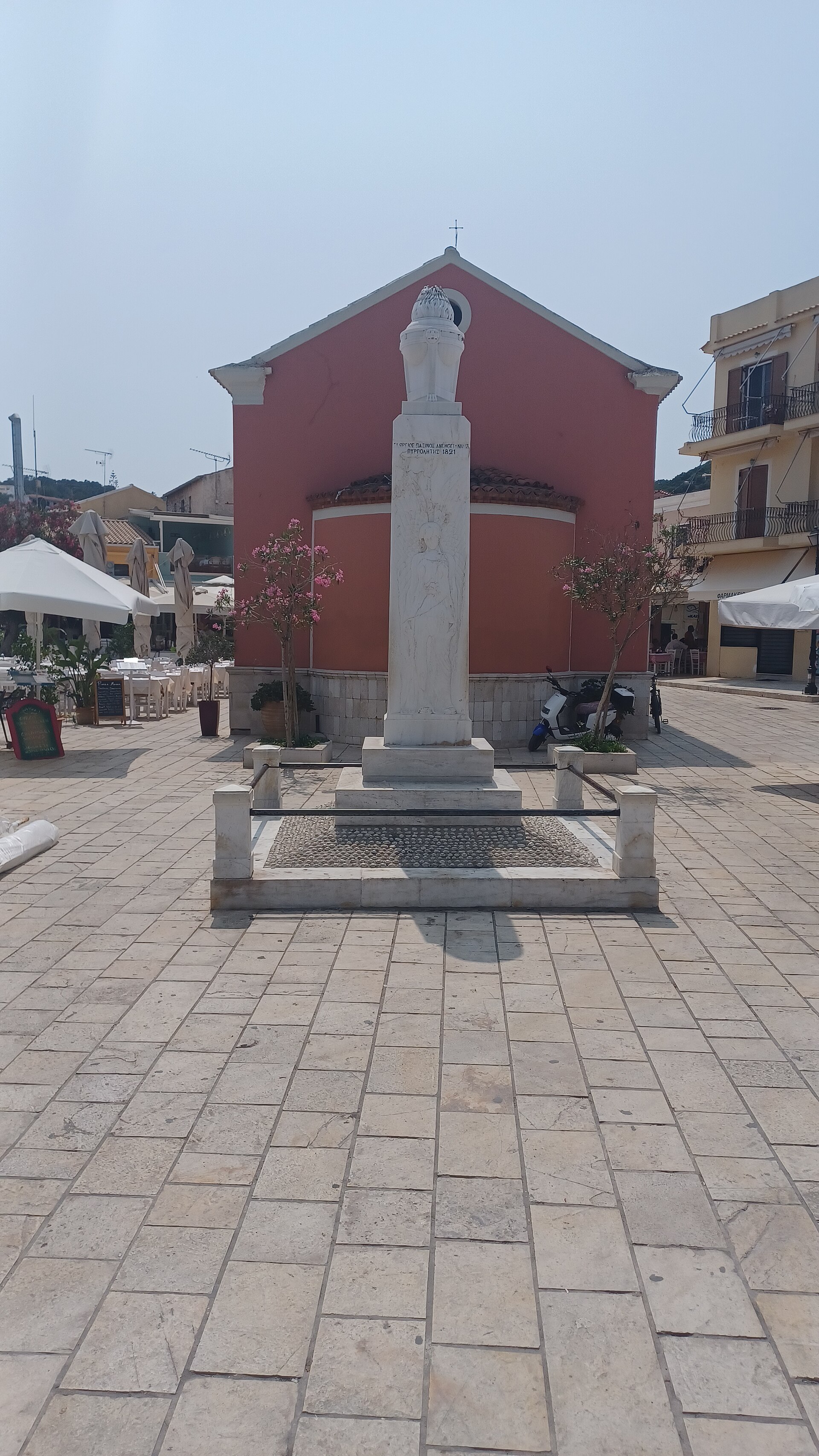
On the Gaios waterfront, proud and facing the sea, stands the monument dedicated to Georgios Anemogiannis, a young hero of the Greek War of Independence born right here on Paxos. His story is steeped in courage and sacrifice: in 1821, at just 23 years old, he attempted a heroic act, trying to set fire to a ship of the Ottoman fleet in the harbor of Nafpaktos. Captured by the enemy, he suffered a cruel martyrdom that made him a symbol of national resistance. The statue is not only a tribute to a patriot, but represents the pride of the people of Paxos and their contribution to the birth of the modern Greek state. Stopping in front of this monument, as modern boats glide silently through the channel, invites reflection on the price of freedom and the unbreakable bond linking this small island to the great history of the Hellenic nation.
The Islet of Panagia and the Monastery
A short distance from Agios Nikolaos stands the second islet that protects Gaios: Panagia (the Virgin Mary). This green rocky isle is dominated by the white monastery of the same name and by a characteristic lighthouse that guides sailors through the night. The monastery is a place of great popular devotion, especially on August 15th, when a procession of boats sets out from the harbor of Gaios to reach the island for the Feast of the Assumption. On that day, the usually silent islet fills with colors, music and traditional songs. For the rest of the year, Panagia remains an oasis of peace, a silent guardian covered in pines and Mediterranean scrub that frames the entrance to the harbor, making the approach to Gaios one of the most spectacular and evocative in all of Greece, almost like entering a natural fjord of crystal-clear waters.
Surroundings and locations: Mongonissi and beyond
A short distance from the center of Gaios, heading south along a scenic coastal road, you reach Mongonissi. This spot is unusual because, although technically an island, it is connected to Paxos by a small bridge. Mongonissi offers one of the island's few sandy beaches, set in a sheltered bay that resembles a natural pool, ideal for families and for those seeking calm waters. Continuing the exploration, the hinterland of Gaios reveals a landscape dominated by centuries-old olive groves, where the gnarled trunks of the trees create natural sculptures of incredible beauty. Small rural hamlets like Ozias preserve traditional stone architecture and offer glimpses of authentic country life. From Gaios, water taxis also depart regularly for Antipaxos, the sister island located just a few kilometers away, famous for its Caribbean-like beaches of Voutoumi and Vrika, considered among the most beautiful in the entire Mediterranean.
The Landscape: between silver olive groves and limestone cliffs
The landscape surrounding Gaios is a triumph of chromatic contrasts. On one side there is the silvery green of the more than two hundred thousand olive trees covering the island, many of which were planted during the Venetian era; on the other there is the blinding white of the limestone cliffs that characterize the western coast, where the sea has carved out spectacular caves and natural arches. The eastern coast, where Gaios lies, is instead gentler and more jagged, dotted with small bays of white pebbles where the water takes on shades ranging from emerald green to cobalt blue. The interior is crossed by a dense network of paths and old mule tracks, ideal for light trekking, allowing visitors to discover dry-stone walls, old cisterns and isolated rural chapels. It is a delicate and precious ecosystem, where nature and human intervention have found a balance that has lasted for centuries, offering views that restore the spirit.
Traditions, flavors and popular culture
The culture of Gaios is deeply tied to the fruits of its land and sea. Paxos olive oil, extracted from the 'lianolia' variety, is renowned for its delicate flavor and its organoleptic properties. In the restaurants along the harbor, local cuisine celebrates the freshness of the daily catch: from grilled octopus to sardines, to 'bourdetto', a spicy fish soup typical of Ionian tradition. Italian influences are also present, evident in dishes such as 'pastitsada'. Thyme honey and local wines, produced in small quantities, complete an authentic gastronomic offering. Folk traditions are still alive in village festivals (panigiria), where the music of the violin and the bouzouki accompanies circle dances until dawn. Living Gaios also means sitting in a 'kafenio' and watching the elders play backgammon, taking part in that social ritual that is the foundation of Greek conviviality.
When to go and how to experience the town
To fully enjoy the magic of Gaios, the best times are late spring (May and June) and early autumn (September and October). In these months the temperatures are pleasant, nature is lush and the town retains its quieter, more authentic soul. July and August see a greater influx of visitors, especially yachtsmen, and the harbor becomes a lively international crossroads. Experiencing Gaios means leaving the clock behind: starting the day with breakfast on the harbor watching the fishermen, hiring a small boat to explore hidden coves and ending the evening with dinner under the stars in one of the taverns tucked away in the inner alleys. It is a place that demands curiosity and respect for its slow rhythms, rewarding the traveler with a sense of peace and beauty that stays etched in the heart long after departure.
- Stroll along the harbor channel at sunset, when the lights reflect on the water.
- Visit the Fortress of Agios Nikolaos by hiring a rowing boat or a water taxi.
- Explore the Museum of Paxos to discover the history of local olive growing.
- Take a day trip to Antipaxos to dive into the waters of Voutoumi.
- Taste fresh fish and local olive oil in a traditional tavern.
- Get lost among the alleys (kantounia) in search of craft shops and flower-filled corners.
FAQ
Come si raggiunge Gaios?
È possibile spostarsi senza auto a Gaios?
Qual è la spiaggia più vicina al centro?
Quanto tempo occorre per visitare Gaios?
Getting there
- Aeroporto Internazionale di Corfù (CFU) - Poi trasferimento al porto per l'aliscafo
- Non presenti sull'isola; collegamenti ferroviari fino a Igoumenitsa (via bus da stazioni greche)
- Raggiungibile imbarcando l'auto sui traghetti da Igoumenitsa o Corfù porto.
- Prenotate l'aliscafo (Flying Dolphin) da Corfù con anticipo nei mesi estivi, poiché i posti sono limitati.
Perfect for
Le cene sul lungomare e i tramonti sulle scogliere rendono Gaios una meta ideale per le coppie.
Il porto è uno dei più pittoreschi della Grecia, perfetto per chi ama la vela e le escursioni in barca.
L'assenza di ritmi frenetici e il contatto con la natura offrono una vacanza rigenerante lontano dal caos.
To see