Benitses
Nestled on the eastern coast of the island of Corfu, Benitses presents itself to the traveller as a fascinating mosaic where a tho...
Updated 7 July 2026
This season · July · Summer
What to do in Benitses now
The story
The story of Benitses
A journey through time: from Roman villas to modernity
Benitses' history has its roots in antiquity, when the fertility of the soil and the abundance of freshwater springs made it a favourite holiday spot for the Roman aristocracy. Traces of this glorious past are still visible in the remains of villas and thermal complexes that dot the area. During the Byzantine period and the subsequent Venetian domination, the village retained its agricultural and maritime vocation, serving as a water supply point for the nearby city of Corfu. The Venetians, in particular, left an indelible mark on the rural architecture and the organisation of farmland. In the 19th century, under the British protectorate, the area saw further infrastructural development, but it was in the 20th century that Benitses underwent its most radical transformation, becoming one of the first Greek resorts to open up to international mass tourism, before evolving towards its current quality tourism offer, respectful of its own roots.
The Roman Baths: a hidden treasure among the houses
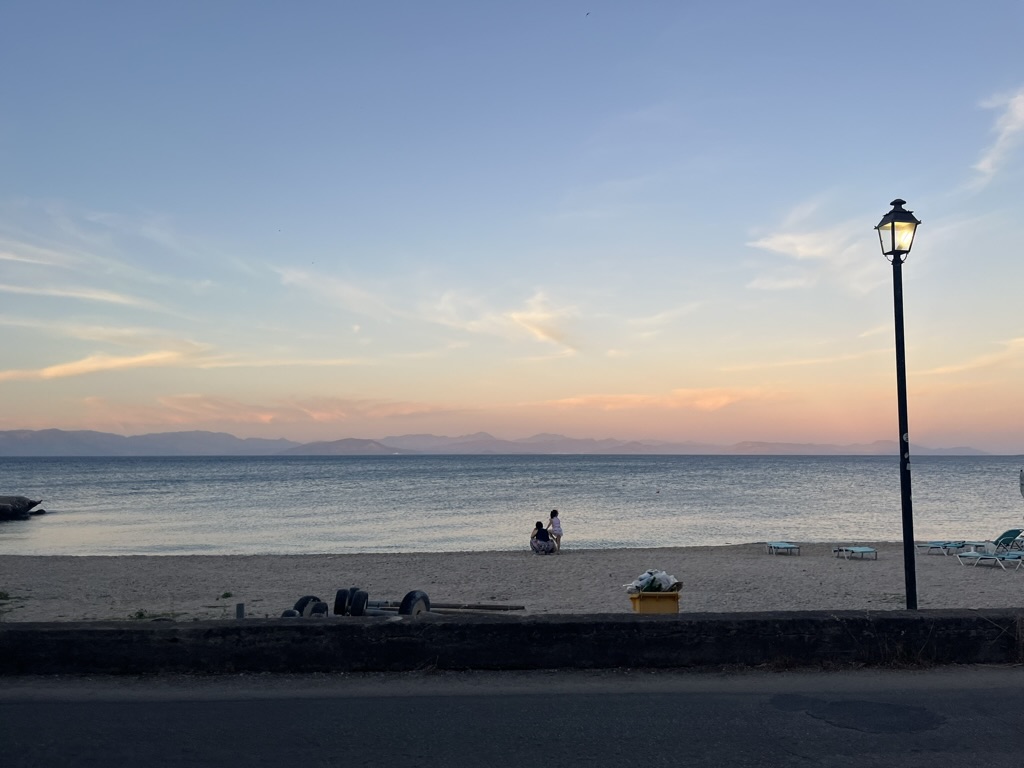
One of the most striking archaeological sites in Benitses is the remains of the Roman Baths, located in a private but accessible area at the heart of the village. This complex was once part of a luxurious seaside villa dating back to the 3rd century AD. What makes this place special is the state of preservation of the mosaic floors, which display geometric decorations and mythological figures that are still clearly visible. The hypocaust heating system, visible through the surviving structures, testifies to the high level of engineering achieved at the time. Visiting these ruins means immersing yourself in an atmosphere of imperial calm, imagining the Roman patricians enjoying Corfu's mild climate while admiring the very same seascape we see today. It is a fragment of history that survives discreetly among the walls of the modern village.
The Sea Museum: the secrets of the deep
For lovers of marine biology and rare specimens, the Sea Museum (Corfu Shell Museum) is an unmissable stop. Founded by diver and collector Napoleon Sayas, this institution houses one of the richest collections of shells and marine finds in Europe. Inside, visitors can admire extremely rare specimens from not only the Ionian Sea but from oceans all over the world: from giant shells to precious corals, right up to stuffed sharks and exotic fish. What makes the museum special is the passion with which every piece has been catalogued and displayed, offering an educational and aesthetic journey into the depths of the sea. It is a place that enchants children and stirs the curiosity of adults, underlining the unbreakable bond that unites Benitses with its sea.
Palia Benitses: the old village at the foot of the mountain
Moving away from the coastal road and climbing inland, one discovers the most authentic soul of the place: Palia Benitses (Old Benitses). This historic nucleus is a maze of cobbled lanes, stone houses with tiled roofs and flowering courtyards where time seems to have stood still. Here the architecture reflects the traditional Corfiot style, with Venetian influences evident in the ochre and Pompeian-red colours of the facades. Walking through these streets allows you to observe the daily life of the inhabitants, far from the bustle of the more touristy spots. It is here that you find the ancient springs that once fed the island's aqueducts, surrounded by lush vegetation of plane trees and fruit trees, offering relief even on the hottest summer days.
The Church of Agia Marina and local devotion
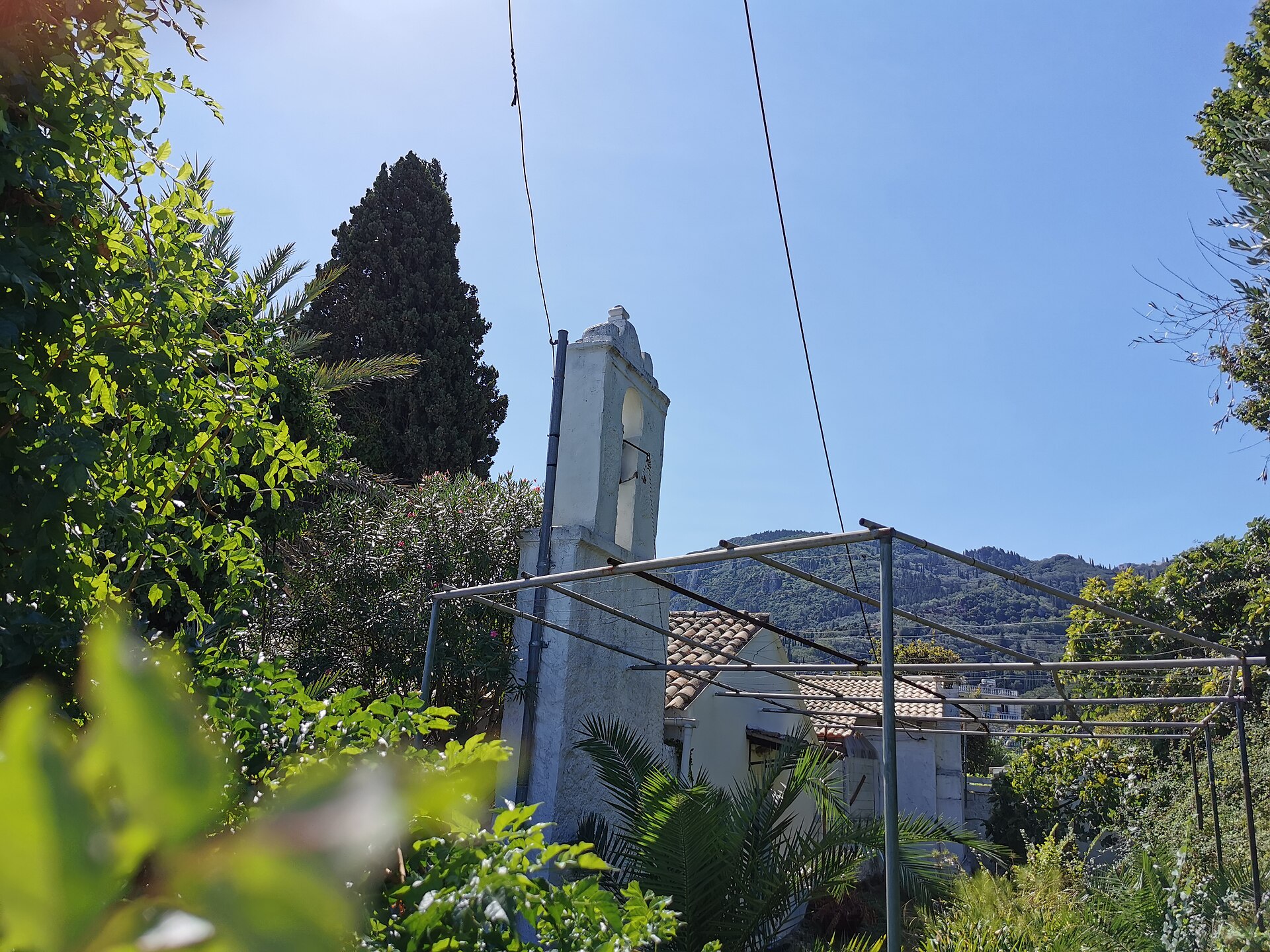
The spiritual life of the village revolves around the Church of Agia Marina, located a short distance from the shore. This small church, with its simple, elegant lines, is the heart of local religious traditions. Dedicated to the patron saint celebrated solemnly on 17 July, the building is a typical example of Ionian sacred art. During her feast day, Benitses is transformed: processions, traditional music and market stalls fill the streets, offering visitors the chance to experience authentic folklore. The church is not just a monument, but a symbol of resilience and identity for the community, which over the centuries has found in faith and its own traditions the strength to overcome foreign dominations.
The landscape: between the blue of the Ionian and the green of the olive groves
Benitses' natural setting is characterised by an extraordinary chromatic contrast. The coastline is a succession of white pebble beaches and clear waters, ideal for snorkelling thanks to the rocky seabed teeming with life. Behind the village, the land rises sharply towards Mount Agioi Deka, covered by a thick blanket of centuries-old olive trees, cypresses and Mediterranean scrub. This natural barrier protects the village from the westerly winds, creating a mild and pleasant microclimate. For hiking enthusiasts, the trails winding up from old Benitses offer spectacular views over the Corfu Channel and the coast of Epirus, allowing you to explore still-wild nature just steps away from the marina's amenities.
Flavours of sea and land: Corfiot gastronomy
The cuisine in Benitses is a celebration of local produce. In the many taverns overlooking the harbour, you can enjoy the day's catch, but it is in the traditional Corfiot dishes that you discover the true essence of the area. You cannot leave without trying 'Sofrito', thin slices of veal cooked with garlic and vinegar, or 'Pastitsada', pasta served with rooster or veal in a rich tomato and spice sauce. Special attention should also be paid to the local olive oil production and Kumquat liqueur, the citrus fruit that is a symbol of the island. The combination of fresh ingredients, Venetian techniques and Greek flavours creates a unique gastronomic experience, made even more enjoyable by the warm hospitality of the local restaurateurs.
Not-to-be-missed experiences
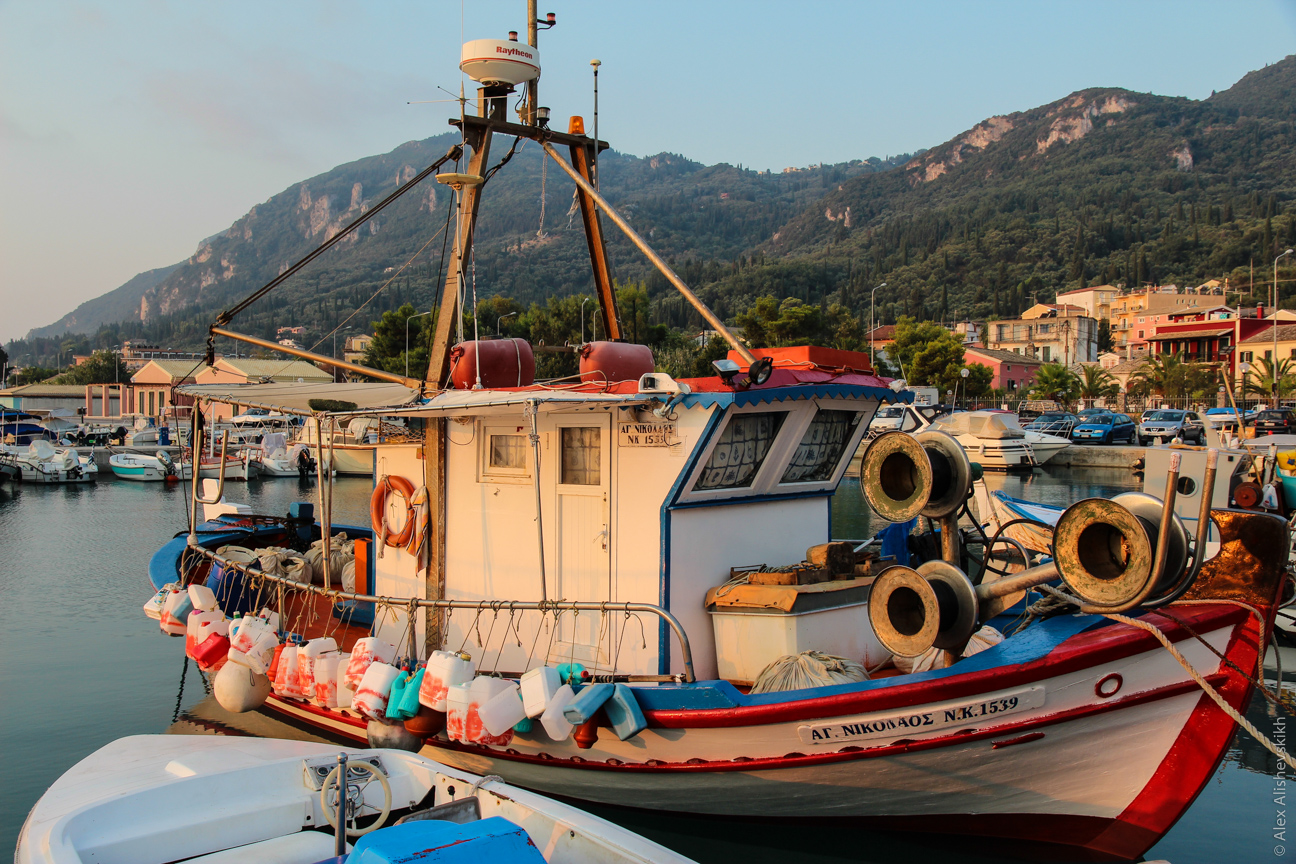
- A morning walk along the marina to watch the fishermen returning with nets full of fish.
- A hike to the village of Gastouri to visit the Achilleion, the palace of Empress Sissi, located just a few kilometres away.
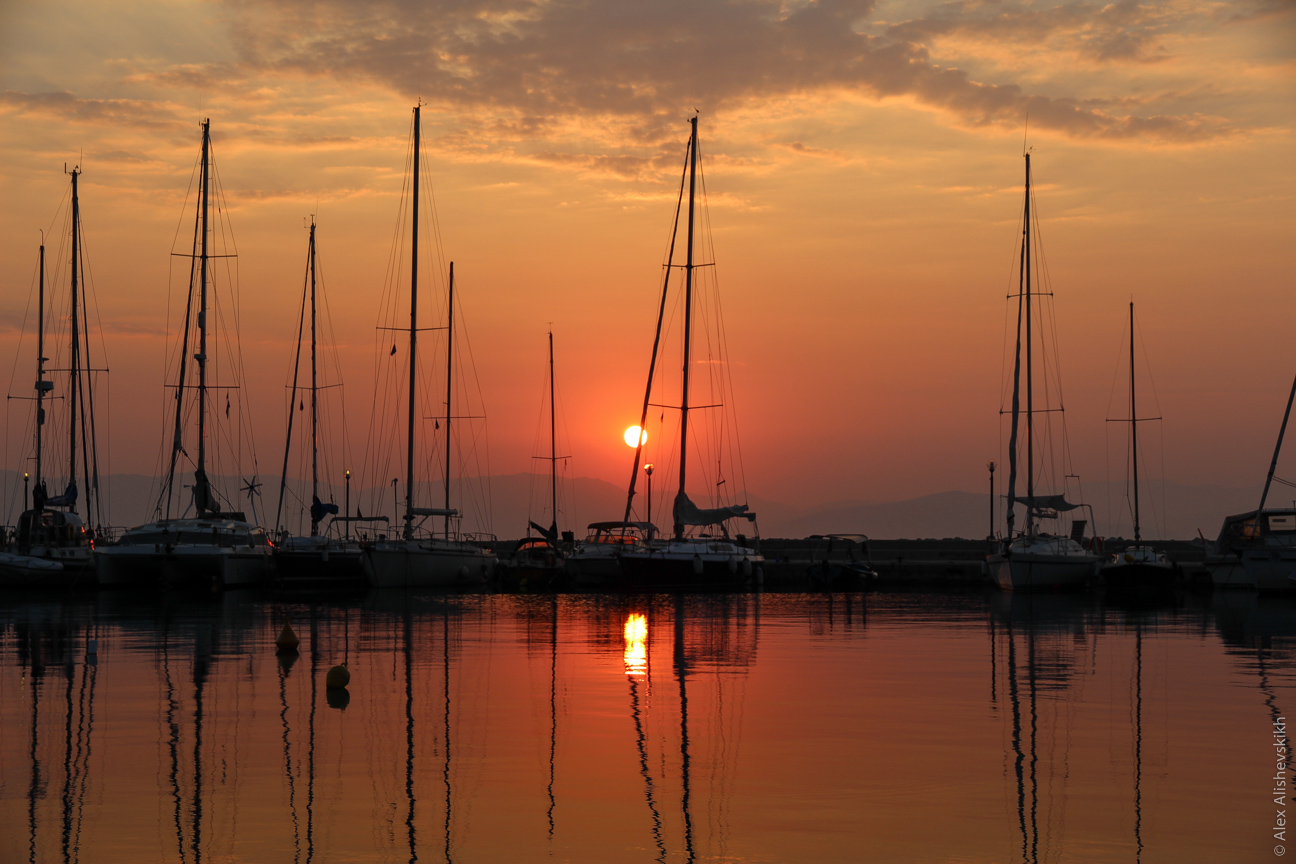
- A sunset dinner in one of the old village's taverns, to savour the tranquillity of Corfu as it once was.
- Renting a small boat to explore the secluded coves south of Benitses, accessible only by sea.
- Taking part in the feast of Agia Marina on 17 July to immerse yourself in the dances and flavours of local tradition.
When to go and how to experience the village
The best time to visit Benitses is from May to October. Late spring and early autumn are ideal for those wishing to explore the natural trails and historic sites without the intense summer heat, while enjoying lower prices and greater tranquillity. High summer is perfect for lovers of the sea and nightlife, which, although more low-key than in the past, still offers excellent cocktail bars and live music. Benitses is an excellent logistical base for exploring the whole island: its central position on the east coast makes it easy to reach both the city of Corfu and the beaches of the south. Experiencing Benitses means accepting the invitation to slow down, alternating refreshing swims with reading in the shade of the olive trees.
FAQ
È facile parcheggiare a Benitses?
La spiaggia è adatta ai bambini?
Quanto dista Benitses dalla città di Corfù?
Cosa vedere a Benitses in un giorno?
Getting there
- Aeroporto Internazionale di Corfù 'Ioannis Kapodistrias' (CFU) - 12 km
- Non presenti sull'isola
- Da Corfù città, seguire la strada costiera verso sud (direzione Lefkimmi). Benitses è ben segnalata e si raggiunge in circa 20 minuti.
- Utilizzate il 'Green Bus' per le lunghe distanze o il 'Blue Bus' n. 6 che collega frequentemente il centro di Corfù con Benitses.
Perfect for
Perfetto per chi ama scoprire tracce romane e bizantine integrate nel tessuto urbano moderno.
Ideale per chi cerca acque limpide, servizi di qualità e una marina moderna ed efficiente.
Ottimo punto di partenza per trekking tra uliveti secolari e sentieri che portano a panorami mozzafiato.
To see
What to see in Benitses
Routes · Trovido Route